Inside Military Dog Training: Essential Terms & Tactical Concepts Used in the Army
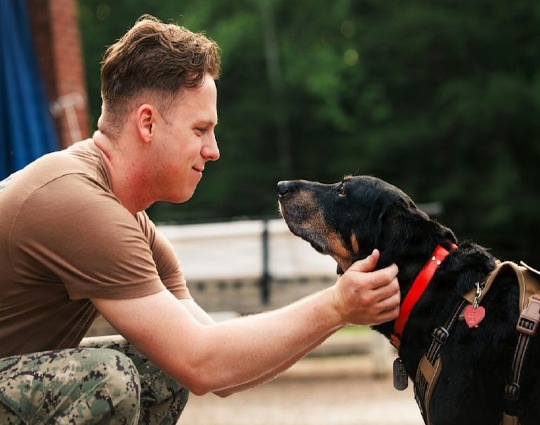
Beyond basic obedience lies a high-stakes protocol where precise communication is literally a matter of life or death.
The modern framework of military dog training transforms high-drive working dogs into elite, tactical assets capable of executing complex missions in extreme operational environments. Centered primarily around Joint Base San Antonio-Lackland in Texas—the headquarters of the 341st Training Squadron—this specialized discipline pairs cutting-edge behavioral science with intensive physical conditioning.
Roughly 2,500 active-duty Military Working Dogs (MWDs) currently serve across all branches of the United States Armed Forces, undergoing a rigorous 120-day instruction protocol designed to achieve an operational success rate above 95% in scent detection and tactical maneuverability.
Throughout this pipeline, handler teams rely on a strict vocabulary of specialized terminology, non-verbal cues, and operational commands to maintain absolute control under fire.
The Dutch and German Command Structure
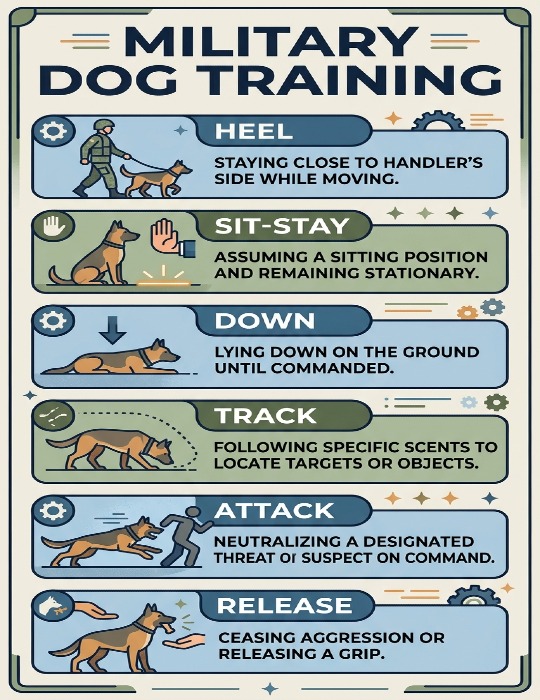
- The Term:Operational Security Language & Verbal Guidance
To ensure operational security and prevent unauthorized intervention or confusion during joint international deployments, handlers almost exclusively utilize a Dutch or German command structure.
Rather than using standard English words like “Sit,” “Down,” or “Heel,” dogs are conditioned to respond instantly to foreign-language directives such as “Sitz,””Platz,” and “Fuss.”
This clear distinction ensures that outside voices or background noise cannot inadvertently override a handler’s control during critical field operations. For civilian owners interested in these working breeds, check out our guide on 10 German Shepherd Temperament Facts Every Family Must Know Before Adopting.
Passive Alert Protocols
- The Term:Non-Intrusive Detection Signaling
When operating in high-threat environments containing improvised explosive devices (IEDs) or unexploded ordnance, military working dogs are trained to execute a passive alert.
Unlike traditional detection dogs that might scratch, dig, or bark at a location, an MWD trained in passive alert will freeze or assume a stationary sit position the moment it identifies an explosive odor plume.
For example, when sweeping an urban doorway, a dog detecting traces of C4 will point its nose directly toward the source without making physical contact, preventing any sudden mechanical trigger from detonating the hazard.
Controlled Aggression and the “Out” Command
- The Term:Bite Release & Escalation Control
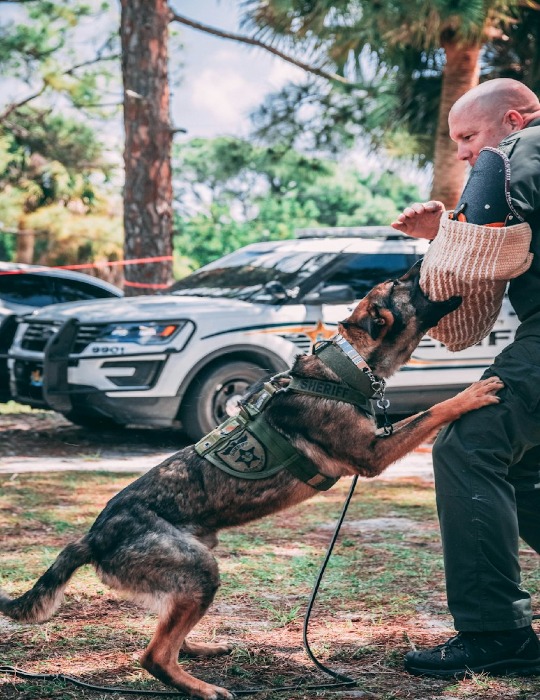
For patrol and combat operations, handler teams rely on controlled aggression and the non-negotiable “Out” command.
While specialized patrol dogs are trained to apprehend hostile targets with high-impact bites, their true value relies on immediate release upon instruction.
When a handler issues the command “Aus” (German for “Out”), the dog must instantaneously release its grip and transition into a stationary guard position, demonstrating an elite level of behavioral control even amidst peak tactical adrenaline.Working on impulse control at home? Learn How to Stop a Dog From Barking at Strangers.
Tactical Directionals and Non-Verbal Distance Control
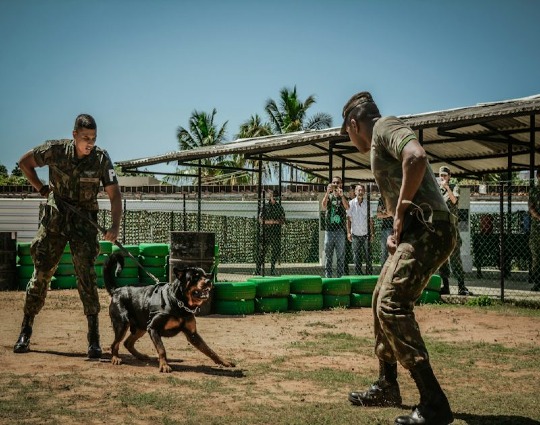
- The Term:Silent Standoff & Remote Navigation
In scenarios where human speech might compromise stealth or be drowned out by heavy gunfire and machinery, handlers pivot to tactical directionals for distance control.
Using directional arm gestures, silent whistle frequencies, or green tactical laser pointers, handlers can maneuver an MWD several hundred meters ahead of the unit.
This capability allows a dog to inspect vehicle undercarriages, clear dark alleys, or check building perimeters while the handler maintains a safe, covered position. To see how elite conditioning builds the stamina required for these maneuvers, read Inside a Professional Dog Fitness Session: What Actually Happens?
Dynamic Odor Plume Tracking
- The Term:Aerodynamic Thermal Target Tracking
Advanced scent work extends beyond static items through dynamic thermal detection, often referred to as Vapor Wake® or odor plume tracking.
By leveraging a dog’s natural ability to detect human scent carried along thermal heat currents generated by body heat and motion, MWDs can track moving targets through crowded transit hubs or dense foliage.
This sophisticated method allows tactical teams to intercept moving threats well before visual contact is established.
Environmental Habituation and Desensitization
- The Term:Stress Conditioning & Stimulus Inoculation
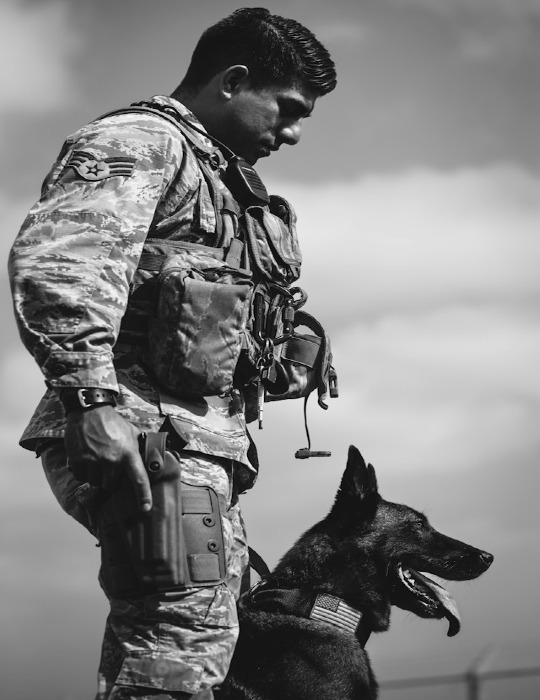
Operating in theater requires total indifference to gunfire, rotary aircraft noise, flashbangs, and unfamiliar terrain.
Through systematic environmental habituation, MWDs undergo stress conditioning where high-value rewards (like a Kong toy or tug) are paired directly with loud, chaotic stimuli.
For instance, dogs practice boarding idling V-22 Ospreys or descending from helicopters via tandem rappelling harnesses, conditioning them to remain hyper-focused on their handler despite extreme environmental stressors.Looking for safer, everyday ways to engage your dog’s mind? Explore our guide on Fun Things to Do With Your Dog: The Ultimate Activity Guide for Owners.
MWD Equipment & Tactical Loadout Terminology
- The Term:K9 Recon & Personal Protective Equipment (PPE)
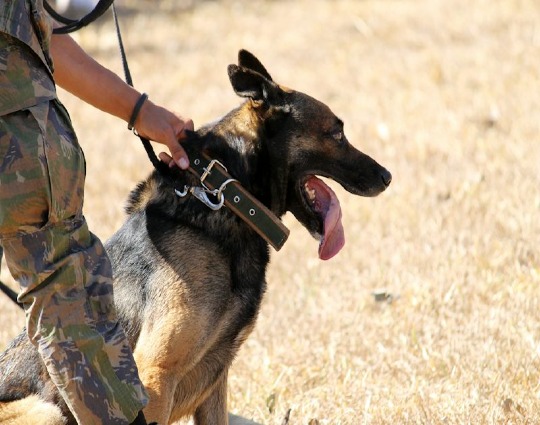
Beyond verbal commands, tactical deployments rely on specialized hardware designed to protect K9 assets and enable real-time intelligence gathering:
- Rex Specs & Ear Morffs: High-impact eye protection (goggles) and acoustic hearing protection designed to guard MWD eyes and ears during helicopter transport, sandstorms, and breaching operations.
- Camera Harnesses & Agility Muzzles: MOLLE-compatible tactical vests equipped with HD video feeds and night-vision capabilities, allowing handlers to view live recon footage as the dog clears structures ahead of the squad.
Most frontline Military Working Dogs (MWDs) serve active-duty tours lasting between 6 to 8 years, depending on physical strain, deployment intensity, and overall health.Upon retirement, federal legislation ensures these canine veterans are prioritized for adoption, usually finding permanent homes with their primary handlers.
Key Takeaways
- Elite Operational Pipeline: Modern military dog training relies on positive reinforcement, drive-based rewards, and rigorous stress conditioning to achieve high operational readiness across tactical detection and patrol roles.
- Precision Communication: Every command—from passive explosive alerts to high-speed bite releases (“Aus”)—is engineered for absolute safety, clarity, and non-verbal execution under active fire.
- Specialized Capability & Gear: Tactical K9 units operate as complete military assets, utilizing specialized protective loadouts (Rex Specs, Ear Morffs) alongside thermal scent-tracking techniques to protect personnel in extreme combat environments.
Final Thoughts
Standardized protocols in military dog training ensure that handler-K9 teams operate with seamless cohesion regardless of deployment environment or military branch.
By fusing precise verbal commands with advanced directional and detection methodologies, this rigorous training pipeline continues to safeguard both military personnel and working dogs on the front lines.
Frequently Asked Questions (FAQs)
What happens to dogs that do not pass military dog training?
Not every canine candidate clears the rigorous selection criteria at Joint Base San Antonio-Lackland.Dogs that washed out due to lower drive or minor behavioral quirks are redirected through official adoption pipelines. Former handlers, law enforcement agencies, and pre-screened civilian families frequently adopt these non-qualifying dogs through the 341st Training Squadron’s placement initiative.
Why are foreign languages used instead of English commands?
Foreign-language commands—primarily German and Dutch—are standard practice in military dog training to eliminate accidental trigger words during field operations. Using non-native terminology prevents bystanders, enemy combatants, or ambient noise from interfering with a handler’s commands while maintaining clear, unambiguous communication between the K9 unit.
How long does a typical Military Working Dog serve before retirement?
Most frontline Military Working Dogs (MWDs) serve active-duty tours lasting between 6 to 8 years, depending on physical strain, deployment intensity, and overall health. Upon retirement, federal legislation ensures these canine veterans are prioritized for adoption, usually finding permanent homes with their primary handlers.


Follow Us
-
-

Preventive Care for Dogs: Ensuring a Long, Healthy Life
Keeping your dog healthy goes beyond just treating illnesses as they arise. Preventive care for dogs is […]
-

Why Older Dogs Rule: Key Benefits of Adopting a Senior Dog
When people picture bringing a new pet into their home, the mental image is almost always dominated […]
-

Post-Vaccine Care for Dogs: Side Effects, Recovery & Care Tips
Vaccinations play a crucial role in protecting your dog from serious diseases, but just like humans, dogs […]
-

How to Dog Sit: Everything You Need to Know Before Your First Client
Stepping into the professional pet care sector is a serious business responsibility where the health and safety […]
-

Dog Side Effects of Rabies Vaccine: What Every Pet Parent Should Know
If you’ve ever worried about the dog side effects of rabies vaccine, you’re not alone. While this […]
-
Is It Time to Upgrade? 3 Dog Fitness Exercises You Can Do at Home (And 3 You Should Leave to a Pro)
If your daily routine consists solely of a thirty-minute stroll around the block, your companion might be […]
Local Ads
