How to Stop a Dog From Barking at Strangers: A Beginner’s Guide

Few sounds shatter a peaceful afternoon quite like the sudden, ear-splitting alarm of a barking dog. Whether it is a frantic explosion of noise when the delivery driver drops off a package or an embarrassing, lunging display when a neighbor walks past during your morning stroll, stranger-directed barking is one of the most common challenges dog owners face.
While it is completely natural to feel a wave of frustration or embarrassment in these moments, it is important to remember that barking is a fundamental form of canine communication, not an act of defiance. In fact, evolutionary biologists note that thousands of years of selective breeding explicitly favored dogs that alerted humans to approaching outsiders.
The secret to a quieter life isn’t forcibly suppressing this instinctual voice; instead, it requires shifting your dog’s underlying emotional response so they no longer view an approaching human as a threat or an uncontrollable source of frustration. By understanding the psychology behind the noise, you can transition your pup from a stressed-out sentry into a calm, focused companion.
Decoding the Noise: Why Your Dog Barks at Outsiders
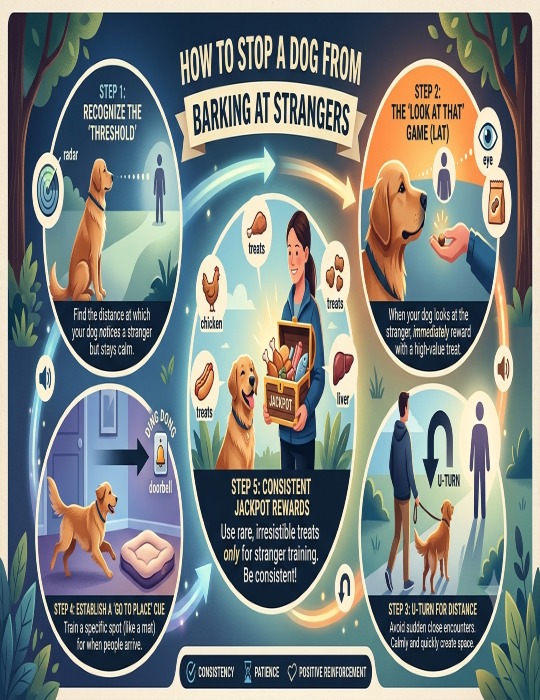
Understanding the precise root cause of the behavior is the crucial first step toward resolving it, as a fear-based bark requires a vastly different approach than an excitement-based one.
For many dogs, the primary driver is territorial alert barking, a behavior heavily reinforced by a classic psychological misunderstanding. When a postal worker approaches your porch, your dog barks frantically, and moments later, the worker walks away; from your dog’s perspective, their bark successfully chased the intruder away, reinforcing a 100% success rate in their mind.
On the other hand, fear and insecurity look quite similar but stem from a desire to create space, where a dog uses a booming bark as a defensive wall to keep an intimidating stranger from getting closer. Finally, some social butterflies suffer from barrier frustration, meaning they actually love people but explode into frantic barking simply because the leash or a window prevents them from greeting the stranger. Identifying which bucket your dog falls into allows you to target the training effectively rather than fighting a losing battle against a generic symptom.
Common Pitfalls: Training Mistakes That Make Barking Worse
When addressing this behavior, well-meaning owners often fall into common training pitfalls that inadvertently make the barking significantly worse. The most frequent mistake is yelling at the dog to “be quiet” or “stop,” which rarely works because, to a highly aroused canine, a shouting human simply sounds like a pack mate barking along in agreement, which amplifies the overall drama of the moment.
Furthermore, relying on punitive tools like shock collars, static corrections, or citronella sprays can have devastating psychological consequences. Certified veterinary behaviorists frequently warn that while punishment might instantly suppress the physical noise out of fear, it fails to fix the internal emotion; in fact, the dog often associates the painful or unpleasant sensation directly with the sight of the stranger.
This dangerous misassociation can quickly escalate mild fear into severe defensive aggression, turning a simple barking problem into a much more serious safety concern. Similarly, forcing a fearful dog to stand still while a stranger reaches out to pet them completely breaks their trust and forces them to choose a “fight” response when their “flight” option is taken away.
Mastering the Walk: Managing Leash Reactivity and Thresholds
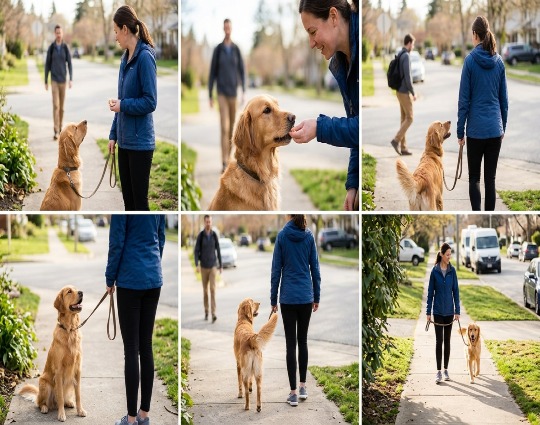
To tackle barking out on walks, you must master the concept of the “threshold,” which is the exact distance at which your dog notices a stranger but can still remain calm and take a treat without reacting. If your dog is already lunging, you have moved too close, meaning their brain is entirely flooded with adrenaline and cortisol, rendering them physiologically incapable of learning.
A highly effective way to manage this is by playing the “Look at That” game, a classical counter-conditioning technique developed by standard positive-reinforcement frameworks. The moment a stranger appears in the distance—well outside your dog’s reactivity zone—you allow your dog to look at them, and the very second they do, you make a distinct clicking sound or say a marker word like “Yes!” and immediately reward them with a high-value treat.
Over several weeks of consistent repetition, your dog’s internal monologue completely rewires from “Oh no, a stranger is coming to get me!” to “Wow, a stranger just appeared, which means my handler is about to give me something amazing!” If a stranger turns a corner too quickly and catches you by surprise, simply execute a cheerful, rapid U-turn to create immediate distance and protect your dog’s emotional threshold.
Securing the Home Front: Defusing the Doorbell Dilemma
Handling the classic doorstep explosion requires a mix of environmental management and teaching an entirely incompatible behavior. A dog cannot physically sprint to the front door and throw its weight against the glass if it is actively running to a specific mat in the living room to earn a reward.
You can build this “Go to Your Place” cue by pairing a specific mat with an extraordinarily high-paying jackpot of treats, eventually practicing it when the doorbell rings so the sound becomes a cue to sprint away from the door rather than toward it.
While you are actively building this habit, managing their environment is absolutely vital to prevent them from practicing the bad behavior when you aren’t around. Installing inexpensive, frosted window film over the lower panes of your living room windows instantly blocks their visual triggers, effectively removing the constant visual stimulation of passing pedestrians and drastically lowering their daily stress levels.
The Golden Rules: High-Value Rewards and Household Consistency

The absolute golden rule of this training process hinges on the value of the currency you use, as standard dry kibble simply cannot compete with the intense rush of a stranger encounter.
To successfully compete with your dog’s deeply ingrained instincts, you need to bring out “jackpot” rewards—think tiny slivers of unseasoned boiled chicken, hot dog wheels, freeze-dried beef liver, or a squeeze tube filled with plain peanut butter—that are strictly reserved for stranger training.
Additionally, total household consistency is non-negotiable; if one family member allows the dog to fence-bark at neighbors while another punishes it, the dog’s confusion will spike, slowing your progress to a crawl. Remember that changing a deeply rooted emotional response takes weeks of patient, incremental steps rather than days.
However, if your dog’s barking ever crosses the line into baring teeth, snapping, or showing intense resource-guarding behaviors over the home, it is time to step back and consult a certified professional dog trainer or a veterinary behaviorist to ensure everyone stays safe.
Progress Over Perfection: Your Path to a Quieter Life

Ultimately, resolving stranger-directed barking is not a linear journey, and there will inevitably be days when an unexpected delivery driver or a sudden corner encounter catches both you and your canine companion off guard.
The key is to view these moments not as failures, but as data points that tell you where your dog’s current threshold lies. Training requires immense patience, but the payoff of a calm, mutually respectful partnership is entirely worth the investment.
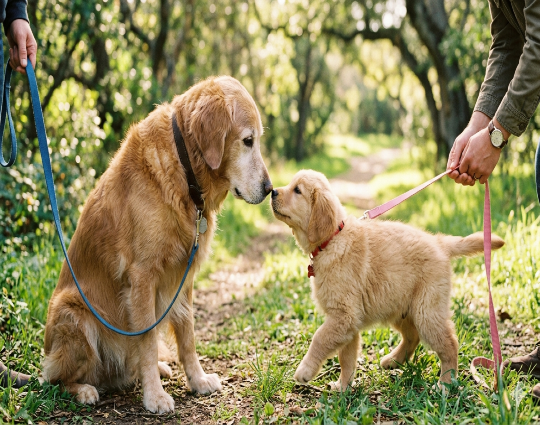
As you build this deeper layer of communication, you will likely find that your ability to read your pup’s subtler cues improves dramatically across the board. In fact, learning how to truly listen to your dog often opens the door to understanding their emotional world more deeply, whether you are trying to master How to Train a Stubborn Dog or learning how to navigate complex household dynamic shifts, such as studying our guide on 7 Top Tips on How to Introduce a Puppy to an Older Dog.
Celebrate the small victories, keep your high-value treats handy, and remember that a quiet home is built one positive association at a time.
Key Takeaways
- Identify the Root Trigger: Determine if your dog is barking out of territorial alertness, fear, or pure barrier frustration before selecting a training strategy.
- Respect the Threshold: Always train at a distance where your dog observes the stranger but remains calm enough to enthusiastically accept a treat.
- Ditch the Punishment: Avoid yelling, scolding, or using correction collars, as these methods fail to change the dog’s internal emotions and often escalate fear into defensive aggression.
- Upgrade Your Treats: Reserve exclusive, high-value “jackpot” rewards like boiled chicken or freeze-dried liver solely for stranger counter-conditioning.
- Manage the Environment: Utilize tools like frosted window film and designated “place” mats to prevent your dog from practicing unwanted barking habits when you aren’t actively training.
Frequently Asked Questions
How long does it typically take to stop a dog from barking at strangers?
Because you are rewiring a deeply ingrained emotional response rather than just teaching a mechanical trick, there is no universal timeline.
Most owners see a noticeable reduction in reactivity intensity within three to four weeks of daily, consistent positive reinforcement, but deeply fearful or long-term reactive dogs may require several months of dedicated conditioning to completely master calm greetings.
My dog wags their tail while barking wildly at people. Does that mean they are just happy?
Not necessarily. A wagging tail simply indicates physiological arousal and emotional energy, not always happiness or friendliness. A stiff, high, rapid wag paired with a tense body and intense staring usually signals a highly alert or threatened dog.
To truly understand if your pup is feeling joyful or stressed, it helps to look at the entire body layout; you can dive deeper into these subtle physical cues by reading our comprehensive breakdown, Beyond the Wag: Decoding the True Signs of Happy Dogs.
What should I do if a stranger approaches us on a walk and insists on petting my reactive dog?
You must act as your dog’s ultimate advocate and strictly protect their emotional boundaries. Politely but firmly hold up a hand and say, “We are in training and he needs his space right now, thank you!” Do not feel guilty or embarrassed for crossing the street or executing a quick U-turn to keep your dog safely below their reactivity threshold.
Should I let my dog look out the front window if they only bark occasionally?
If you are actively trying to modify stranger-directed barking, it is highly recommended to restrict window access completely during the initial training phases.
Every single time your dog barks at a passerby from the window, their brain experiences a massive surge of adrenaline, which keeps their baseline cortisol levels elevated for hours afterward.
Allowing even occasional visual access makes it significantly harder for them to stay below threshold when you are out working on your structured walks.
Can background noise or white noise machines help reduce alert barking at home?
Yes, audio management is an exceptional tool to pair with your “Go to Your Place” training. Playing calming classical music, white noise, or brown noise near your home’s entryway helps mask ambient outdoor sounds—such as distant footsteps, car doors slamming, or talking neighbors—before they can trigger your dog’s auditory radar, keeping the household baseline much more peaceful.


Follow Us
-
-

Dog Bonding Activities: How to Build a Healthy, Happy Relationship With Your Dog
Building a deep, lasting bond with your dog isn’t just about affection—it’s about creating a relationship based […]
-

Are Your Pet Health Exams Thorough Enough? A Vet’s Top 5 Priorities
For most pet owners, the annual visit to the veterinarian is a familiar routine: a quick temperature […]
-

A Comprehensive Vaccine Guide: Everything You Need to Know About Dog Vaccinations
Vaccinating your dog is one of the most important steps in ensuring their long-term health and protection […]
-

Funny Pet Behavior: How Pets Try to Get Out of Trouble (And Succeed!)
Pets are lovable, mischievous companions who always find ways to get themselves into trouble—and out of it […]
-

Common Dog Vaccine Myths and Facts: Debunking Misinformation About Dog Vaccines
In the age of the internet, misinformation spreads faster than viruses—especially when it comes to pet health. […]
-

How to Choose the Best Vet Near Me for Dogs: A Complete Guide for Pet Owners
Finding the right vet for your dog is one of the most important decisions you’ll make as […]
Local Ads
