How to Get a Healthy, Shiny Coat on Your Dog: The Ultimate Guide

There is nothing quite like running your hands through a dog’s coat and feeling that velvety, thick, ultra-glossy texture. Beyond the pure joy of a soft petting session, a radiant coat is the ultimate external billboard of a dog’s internal well-being. When a pup’s skin is supple and their fur catches the light, it tells you that their immune system, digestive tract, and metabolic health are firing on all cylinders.
Conversely, a dull, brittle, or constantly shedding coat is often the first silent alarm system a dog’s body uses to signal that something underneath the surface is missing. Statistics from veterinary dermatology clinics reveal that skin and coat issues are among the top three reasons pet parents seek veterinary care each year, proving that maintaining that healthy glow is a widespread challenge.
If your best friend’s fur is looking a bit lackluster, you do not need an expensive miracle cure; you simply need to master the fundamental pillars of canine health that transform a coat from dry to dazzling.
It Starts on the Inside: The Nutrition Factor
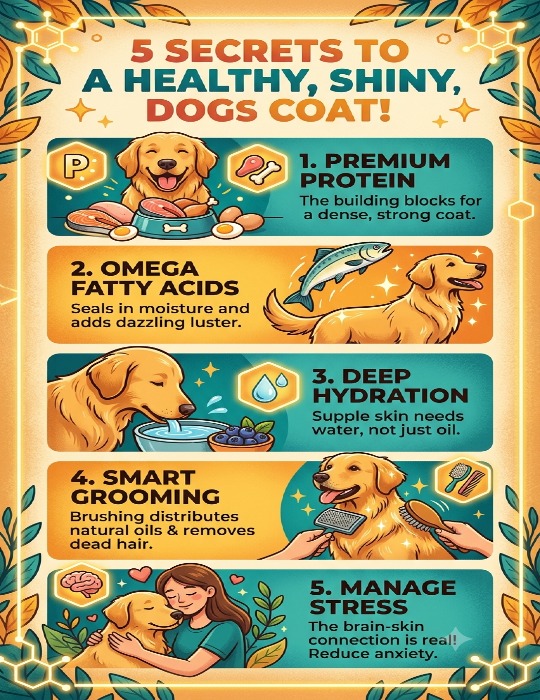
A beautiful coat is built entirely in the kitchen, not the grooming salon. Because a dog’s hair is composed of up to 90% protein, their body diverts a massive amount of their daily nutrient intake—up to 30% of their total protein consumption—just to maintain their skin and fur.
If their kibble or fresh diet is packed with low-quality fillers, their internal organs will rightfully hoard the good nutrients, leaving the coat starving, brittle, and prone to heavy shedding. Understanding the intricacies of Dog Nutrition: Key to Wellness and Longevity in Preventive Care for Dogs is essential here, as the diet must be rich in highly digestible animal proteins like wild-caught salmon, beef, or chicken, paired with a robust profile of essential fatty acids.
Omega-3 and Omega-6 fatty acids act as a natural moisture barrier, sealing hydration into the skin cells and lubricating the hair shaft from the root. Clinical studies have shown that dogs supplemented with an optimal balance of marine-sourced eicosapentaenoic acid (EPA) and docosahexaenoic acid (DHA) show a measurable increase in coat glossiness and a significant reduction in skin scaling within just 28 days.
Beyond structural proteins and fats, hydration plays an equally critical role that many dog owners overlook. When a dog is even mildly dehydrated, their body pulls moisture away from the peripheral tissues, leaving the skin dry and the hair shafts prone to splitting. If you are feeding a strictly dry kibble diet, which typically contains only about 10% moisture, your dog has to drink an immense amount of water just to break down their food and stay hydrated.
You can instantly elevate their hydration levels and boost coat vibrancy by introducing moisture-rich whole foods into their bowl. Adding a splash of bone broth, a spoonful of plain, unsweetened kefir, or nutrient-dense fresh toppers can work wonders.
For instance, tossing in a few raw blueberries—which are bursting with cellular-repairing antioxidants—or a couple of slices of fresh, skin-supporting cucumber provides both a hydration boost and vital micronutrients that standard processing often degrades.
Grooming Smarter, Not Harder

When a coat starts looking a little dull, the instinct for many pet parents is to reach for the shampoo bottle, but over-bathing is actually one of the quickest ways to ruin a dog’s natural luster. A dog’s skin is incredibly delicate, boasting a completely different pH balance than human skin—canine skin is much more alkaline, sitting around a pH of 6.2 to 7.5, whereas human skin sits around a more acidic 5.5.
When you bathe a dog too frequently, or worse, use a human shampoo, you strip away the acid mantle and the vital sebum oils that protect the skin barrier and give the fur its natural shine. For the vast majority of breeds, a bath every 4 to 6 weeks is the sweet spot. When you do bathe them, look for high-quality, soap-free canine formulas featuring nourishing, moisture-locking ingredients like colloidal oatmeal, aloe vera, and natural silk proteins, ensuring you always rinse thoroughly to prevent dried soap residue from causing irritation and flaking.
The true secret weapon of coat care isn’t the bathtub at all; it is a dedicated, daily brushing routine. Regular brushing acts as a natural massage that stimulates blood circulation to the hair follicles, promoting new, robust growth while evenly distributing those precious natural sebum oils from the base of the skin all the way down to the tips of the fur.
It also physically removes dead undercoat hair, dirt, and dander that trap moisture underneath and cause the coat to look matte and cloudy. If your pup despises brush time, implementing strategies for 7 Secrets to a Truly Happy Dog Grooming Experience can turn a stressful chore into a bonding ritual. The trick is matching the tool to your dog’s specific coat type to ensure you are actually pulling out dead fur rather than just skimming the surface.
- Slicker Brushes. These feature fine, wire pins and are absolutely essential for medium-to-long or curly-coated breeds (like Golden Retrievers or Poodles) to gently untangle micro-knots and grab loose undercoat.
- Rubber Curry Brushes. Perfect for short-haired breeds (like Boxers or Labs), acting like a magnet to pull away loose, prickly hairs while stimulating oil production.
- Undercoat Rakes. A must-have for heavy double-coated breeds (like Huskies or German Shepherds) to safely clear out the dense, woolly under-layer before it creates a dulling buildup.
The Environmental Shield: Protecting the Coat Across the Seasons

Just as our skin suffers during the biting cold of winter or the scorching heat of summer, a dog’s coat is highly vulnerable to seasonal shifts. During the winter months, artificial indoor heating acts like a giant dehumidifier, stripping moisture directly from your dog’s epidermis and leading to that frustrating “winter dander” and static-heavy fur.
Conversely, the summer months bring a barrage of coat-stripping elements, from intense UV radiation that can bleach and weaken hair proteins to residual chlorine from backyard pools or drying salt crusts from beach trips. Statistics show that seasonal shedding spikes dramatically during these transitional periods, often causing panic among pet owners who mistake a natural “coat blow” for a health issue.
To shield their fur year-round, proactive adjustments are essential. In the winter, running a humidifier in your home and applying a dog-safe, leave-in conditioning spray can seal in vital moisture. In the summer, rinsing your pup with fresh, clean water immediately after an outdoor swim prevents harsh chemicals or minerals from drying into a brittle, dulling crust, ensuring their natural radiance never takes a seasonal vacation.
The Age Factor: Keeping the Glow from Puppyhood to the Golden Years

A dog’s coat is a living timeline of their life, and its structural needs shift dramatically as they transition through different life stages. Puppies are born with an incredibly soft, single-layered coat designed primarily for warmth, but between four to eight months of age, they undergo a massive hormonal shift where they completely shed this baby fluff to make way for their coarser, denser adult coat.
This transition period requires a massive surge in micronutrients, making high-quality puppy formulations non-negotiable. On the flip side of the spectrum, as dogs enter their golden years, their metabolic rate slows down, and their bodies become less efficient at absorbing synthetic nutrients and synthesizing fatty acids. This is why senior dogs so frequently suffer from a faded, coarse, or patchy coat texture.
To keep a senior dog’s coat looking youthful and vibrant, their diet often requires a targeted boost of vitamins, and consulting a specialist like a How Veterinary Nutritionist at a Dog Hospital Near Me Can Transform Your Dog’s Health expert can ensure your aging companion gets highly bioavailable zinc and biotin to assist with cellular turnover, alongside gentle, low-impact grooming sessions that accommodate aging, sensitive joints while still clearing away dulling debris.
Stress, Anxiety, and the Brain-Skin Connection

One of the most fascinating, yet frequently overlooked, influences on a dog’s coat quality is their psychological well-being. Canines possess a complex bidirectional pathway known as the brain-skin axis, meaning that psychological stress translates directly into physical skin inflammation and coat deterioration.
When a dog experiences chronic anxiety—whether from separation anxiety, a recent move, or a loud, chaotic environment—their body releases a steady cascade of the stress hormone cortisol. High cortisol levels actively disrupt the skin’s natural lipid barrier, slow down hair growth cycles, and can trigger a condition known as telogen effluvium, where hair follicles prematurely enter the resting phase and shed out all at once, leaving the coat looking thin and lifeless.
Furthermore, stressed dogs often develop nervous behavioral tics, such as obsessive licking of their paws or flanks, which introduces excess saliva that stains the fur a rusty brown color and creates localized hot spots.
Addressing a dull coat often requires looking beyond the brush and the bowl to assess your dog’s mental peace; introducing calming routines, predictable schedules, and mental enrichment can dramatically lower stress levels, allowing their physical coat to naturally heal and regain its brilliant luster.
Hidden Culprits Behind a Dull Coat

Sometimes, despite a flawless diet and an impeccable grooming routine, a dog’s coat simply refuses to shine. When this happens, it is usually because an invisible environmental or internal culprit is hijacking their health. Environmental allergies—ranging from seasonal pollen and house dust mites to mold spores—run rampant in dogs, often manifesting as intensely itchy skin, redness, and constant licking or scratching.
This continuous self-trauma breaks the hair shafts, introduces bacteria, and leaves the coat looking patchy, dry, and thoroughly exhausted. Food sensitivities, particularly to common protein sources or artificial dyes, can trigger a similar inflammatory response, turning the skin into a battlefield and leaving the fur looking lifeless and greasy.
Another massive, yet completely preventable, enemy of a glowing coat is the presence of external parasites. A single flea bite can trigger Flea Allergy Dermatitis (FAD) in sensitive dogs, causing a cascade of intense itching, hair loss around the base of the tail, and a severely damaged coat texture.
Beyond pests, if you notice your dog’s fur becoming uniformly dry, brittle, symmetrical in its thinning, or accompanied by sudden weight gain and lethargy, it may point to a systemic hormonal imbalance. Endocrine disorders such as hypothyroidism or Cushing’s disease directly impair the body’s ability to regenerate skin cells and grow healthy fur.
If a dull coat is paired with these behavioral changes, a quick trip to the veterinarian for a standard blood panel is the smartest move to catch the underlying issue and get your pup back on the path to vibrant health.
Key Takeaways
- Prioritize Premium Protein. Ensure your dog’s primary food features highly digestible animal proteins like salmon, beef, or chicken, which provide the essential amino acids needed to build a strong, dense healthy shiny coat structure.
- Balance the Omegas. Boost skin hydration and coat gloss by introducing targeted Omega-3 and Omega-6 fatty acids, ideally through marine-sourced EPA and DHA oils.
- Hydrate from the Inside Out. Upgrade your dog’s daily fluid intake by adding moisture-rich whole-food toppers like bone broth, plain kefir, raw blueberries, or fresh cucumber slices to dry kibble.
- Groom with the Right Tools. Ditch the heavy baths and stick to a daily brushing routine tailored to your dog’s specific coat type (slicker brushes for long hair, curry brushes for short hair, and undercoat rakes for double coats).
- Protect Against the Seasons. Shield their fur from seasonal extremes by running indoor humidifiers during dry winter months and rinsing away harsh salt or pool chlorine immediately after summer swims.
- Nurture the Brain-Skin Connection. Chronic stress and separation anxiety spike cortisol, which actively damages the skin barrier; keeping a calm environment and a predictable routine keeps the fur vibrant.
Final Thoughts
Transforming your dog’s coat from lackluster to a brilliant, head-turning shine is a journey that requires patience, consistency, and a holistic approach to their daily care.
By upgrading the proteins and essential fats in their bowl, keeping them deeply hydrated, brushing out the dead undercoat daily, and keeping an eye out for hidden health disruptors, you are giving your pup the building blocks they need for a lifetime of radiant health.
Remember, a coat doesn’t change overnight; it takes a few weeks for new, nourished hair to grow in, but the dazzling results are entirely worth the wait.
FAQs
1. How long does it take to see improvements in a dog’s coat?
Patience is key when waiting for that beautiful glow, because you are essentially waiting for a brand-new generation of fur to grow in. On average, it takes about 3 to 6 weeks of consistent nutritional changes and grooming habits to see a noticeable transformation in your dog’s coat shine and skin texture.
This timeline is dictated by the natural canine hair growth cycle, which includes the anagen (growth), catagen (regression), and telogen (resting) phases. The nutrients your dog digests today are currently fueling the microscopic hair follicles deep beneath the skin surface; as the old, brittle, nutrient-deprived fur sheds away, the new, omega-rich, deeply hydrated strands will emerge to take its place.
2. Can I give my dog human fish oil supplements for their coat?
While the active ingredients—Omega-3 fatty acids like EPA and DHA—are highly beneficial for both humans and dogs, giving your dog a standard human fish oil capsule can be surprisingly risky.
Human supplements are formulated for our specific body weights and digestive capabilities, meaning they are often far too concentrated for a dog’s system, potentially leading to severe stomach upset, diarrhea, or even acute pancreatitis if the fat load is too high.
Furthermore, many human supplements contain added flavorings, preservatives, or sweeteners like xylitol, which is highly toxic to canines. To keep your pup safe and ensure they are getting the exact, calibrated ratios of fatty acids they need, it is always best to opt for a dedicated, veterinary-formulated canine marine oil that includes a pump or dropper for precise dosing based on your dog’s exact weight.
3. What are the best natural foods to add to my dog’s diet for shine?
If you want to boost your dog’s coat brilliance using real, whole foods, there are a few incredible, safe pantry staples you can introduce as meal toppers. Wild-caught, cooked salmon, sardines packed in water (with no added salt), or a small drizzle of pure, unrefined coconut oil are fantastic powerhouses loaded with healthy lipids that directly feed the skin barrier.
Another exceptional option is a fresh egg; eggs are nature’s ultimate beauty food, packed with highly bioavailable protein, lutein, and biotin, which actively strengthens hair elasticity and prevents brittle breakage.
Just remember to introduce any new fresh food slowly and in moderation—keeping extra toppers to less than 10% of their daily caloric intake—to ensure your dog’s tummy stays just as happy as their skin.


Follow Us
-
-

Preventive Care for Dogs: Ensuring a Long, Healthy Life
Keeping your dog healthy goes beyond just treating illnesses as they arise. Preventive care for dogs is […]
-

The Role of a Dog Clinic Near Me in Preventing Common Canine Diseases
As a dog owner, you want your furry friend to live a long and healthy life. One […]
-

Schedule of Dog Vaccinations: The Complete Guide Every Pet Parent Needs
When it comes to protecting your dog’s health, few things are more important than staying on top […]
-

How to Train a Stubborn Dog (Is Your Dog Actually Stubborn Or Are You Just Boring?)
You ask your dog to sit. They look you dead in the eye, sniff a random spot […]
-

A Comprehensive Vaccine Guide: Everything You Need to Know About Dog Vaccinations
Vaccinating your dog is one of the most important steps in ensuring their long-term health and protection […]
-

Comprehensive Guide to Dog Clinics: Services and Benefits
When it comes to ensuring the health and happiness of our furry friends, finding a reliable and […]
Local Ads
