Is Your Dog Itchy? The Best Dog Food for Allergies

If you find yourself constantly woken up in the middle of the night by the thumping sound of your dog scratching their ears, or if you regularly catch your pup obsessively gnawing on their paws until they turn red and raw, you are far from alone.
Persistent itching, chronic ear infections, inflamed skin, and recurrent hot spots are among the most exhausting issues a pet parent can face, leading many to search relentlessly for the best dog food for allergies.
While many owners immediately assume that environmental factors like pollen or grass are to blame, adverse food reactions represent roughly 10% to 25% of all allergic skin diseases in dogs.
Finding true relief requires cutting through commercial marketing claims, understanding the underlying immunology behind food sensitivities, and learning how Dog Nutrition: Key to Wellness and Longevity in Preventive Care for Dogs plays a crucial role in stopping your dog’s immune system from going into overdrive.
Understanding Canine Food Allergies vs. Environmental Sensitivities
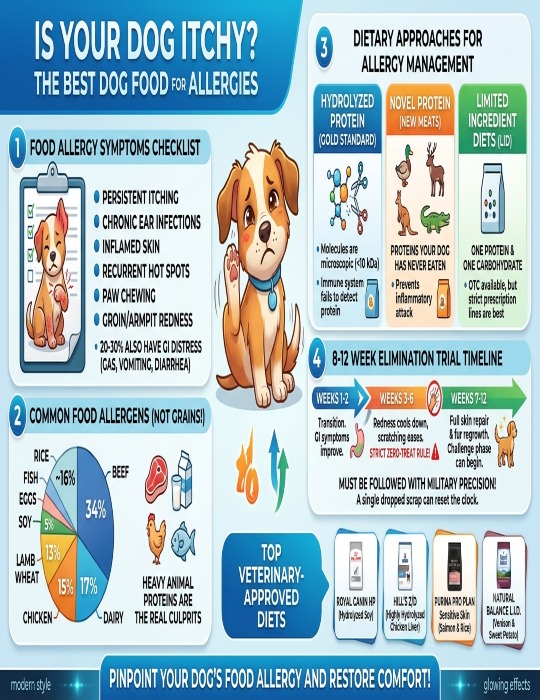
Distinguishing between environmental atopy (seasonal allergies) and food allergies can be challenging because their physical symptoms overlap significantly. However, clinical data reveals key diagnostic differences that every dog owner should monitor carefully.
Key Clinical Difference: Environmental allergies fluctuate with the seasons, whereas food allergies cause year-round symptoms that persist regardless of weather or geographic location. Furthermore, while environmental allergies usually manifest after a dog reaches one to three years of age, food sensitivities can present at any time—even in puppies under six months or senior dogs that have eaten the exact same kibble for years.
| CANINE ALLERGY SYMPTOM OVERLAP | |
| Environmental Atopy (Pollen/Dust) | Food Allergy (Protein Sensitivity) |
| • Seasonal flare-ups | • Year-round, constant itchiness |
| • Clear nasal discharge/sneezing | • Recurrent ear infections & hot spots |
| • Face rubbing & feet licking | • Paw chewing & groin/armpit redness |
| • Rare gastrointestinal symptoms | • 20%–30% also suffer GI distress |
Veterinary dermatological studies indicate that approximately 20% to 30% of dogs with cutaneous (skin) food allergies also exhibit gastrointestinal symptoms. If your itchy dog also experiences frequent soft stools, chronic gas, vomiting, or passes bowel movements more than three times a day, there is a significantly higher statistical likelihood that a dietary allergen is the culprit.
The Real Culprits: Common Food Allergens
Contrary to widespread boutique pet food advertising, grains like corn, wheat, and soy are not the primary drivers of canine allergies. Research compiled across veterinary dermatology literature demonstrates that canine food allergies are almost always triggered by heavy animal proteins that the immune system misidentifies as harmful invaders.
| Allergen Source | Percentage of Diagnosed Canine Food Allergies |
| Beef | 34% |
| Dairy Products | 17% |
| Chicken | 15% |
| Wheat | 13% |
| Lamb | 5% |
| Soy, Eggs, Pork, Fish, Rice | Combined ~16% |
Because beef, dairy, and chicken have historically been the most common primary ingredients in commercial pet foods, dogs develop antibodies to these specific molecular structures over long-term exposure.
Dietary Approaches: Hydrolyzed vs. Novel Protein vs. Limited Ingredient
When searching for the best dog food for allergies, you will encounter three primary dietary categories. Understanding how each formulation works at a biological level will help you choose the right approach alongside your veterinarian.
1. Hydrolyzed Protein Diets (Prescription)
Hydrolyzed diets represent the gold standard in veterinary allergy management. Through a specialized enzymatic process called hydrolysis, protein molecules (such as soy or chicken liver) are broken down into microscopic peptide chains measuring under 10 kilodaltons (kDa) in size. Because intact allergic proteins typically range from 15 to 40 kDa, these tiny hydrolyzed peptides are physically too small to cross-link with the IgE antibodies on mast cells. As a result, the immune system fails to detect the protein, rendering the food virtually invisible to an allergic response.
2. Novel Protein Diets (Prescription & High-Tier OTC)
A novel protein diet relies on animal proteins that your dog’s immune system has never previously encountered. Because an allergic reaction requires prior sensitization, feeding an unfamiliar protein source prevents the immune system from launching an inflammatory attack. Common novel proteins include venison, kangaroo, alligator, rabbit, and duck paired with clean single-carb sources like sweet potato or green peas.
3. Limited Ingredient Diets (LID)
Over-the-counter Limited Ingredient Diets strip away unnecessary fillers, complex herbal blends, and multi-protein mixes, locking the formula down to one clear protein source and one clear carbohydrate. While excellent for ongoing maintenance, pet parents must exercise caution: studies testing commercial over-the-counter LIDs have frequently detected unlisted protein contaminants due to shared manufacturing equipment. For a strict diagnostic elimination trial, prescription foods processed on dedicated, sanitized lines remain far more reliable.
Top Recommended Foods for Dogs with Allergies

Depending on whether your dog requires an active diagnostic trial or long-term dietary management, these top veterinary and nutritionist-approved options stand out:
- Best Overall Prescription Hydrolyzed: Royal Canin Veterinary Diet Hydrolyzed Protein HPPrimary Protein: Hydrolyzed Soy IsolateWhy It Works: Royal Canin’s strict manufacturing isolation guarantees no cross-contamination. The broken-down soy proteins pass undetected by the immune system while providing complete amino acid nutrition. It also features optimized B-vitamins and amino acids to reinforce the physical skin barrier.
- Best for Severe / Refractory Cases: Hill’s Prescription Diet z/d Ultra Skin/Food SensitivitiesPrimary Protein: Highly Hydrolyzed Chicken LiverWhy It Works: Formulated specifically to eliminate adverse food reactions affecting skin and coat. Hill’s uses extensively hydrolyzed chicken liver where the protein weight is so low that even dogs with severe chicken allergies can consume it with complete safety.
- Best Over-the-Counter Sensitive Skin & Stomach: Purina Pro Plan Adult Sensitive Skin & Stomach (Salmon & Rice)Primary Protein: Real SalmonWhy It Works: Free from chicken, beef, wheat, and corn, this accessible over-the-counter diet utilizes high-protein salmon alongside easily digestible oat meal and rice. Rich in Omega-3 fatty acids (EPA and DHA), it actively calms systemic skin inflammation while supporting gut microbiome health through prebiotic fiber.
- Best Over-the-Counter Limited Ingredient Diet: Natural Balance L.I.D. Sweet Potato & VenisonPrimary Protein: VenisonWhy It Works: Uses a true novel protein source combined with grain-free carbohydrate energy from sweet potatoes. Designed with minimal total ingredients to lessen the likelihood of digestive or dermatological flare-ups in dogs with mild-to-moderate sensitivities.
Executing an Elimination Diet Trial: The 8 to 12 Week Protocol
Switching your dog to the best dog food for allergies will yield minimal results if the feeding protocol isn’t executed with military precision. Blood and hair tests for canine food allergies are notorious for high false-positive rates; an Elimination Diet Trial remains the only scientifically proven method to diagnose a true food allergy.
| 8-12 WEEK ELIMINATION TRIAL TIMELINE | |
| Weeks 1 – 2 | Transition to therapeutic food over 7-10 days. GI symptoms (gas, soft stool) usually improve first. |
| Weeks 3 – 6 | Skin redness begins to cool down; scratching eases. Strict ZERO-TREAT rule must be maintained daily! |
| Weeks 7 – 12 | Full skin barrier repair & fur re-growth occur. Challenge phase can begin to identify exact trigger. |
The Zero-Tolerance Rule: During the 8 to 12 weeks of an elimination diet, your dog must consume absolutely nothing except their prescribed therapeutic food and water. A single chicken-flavored biscuit, flavored heartworm chew, piece of cheese for pills, or scrap dropped on the kitchen floor can trigger an immune response that resets the diagnostic clock back to day one.
While you navigate this strict phase, you might be tempted to soothe immediate skin irritation with quick fixes; however, while exploring these 10 Surprising Dog Home Remedies Hiding in Your Pantry can provide topical comfort for minor itching, make sure no ingredients interfere with their strict internal diet.
Final Thoughts
Watching your beloved companion scratch incessantly, lick their paws raw, or suffer from recurring ear infections is heartbreaking, but relief is well within reach. To learn more about navigating customized meal plans, consider attending a session on Dog Nutrition Near Me: Interactive Workshop & Local Dog Nutrition Classes to gain hands-on knowledge.
By identifying whether your pup suffers from protein sensitivities, eliminating common triggers like beef and chicken, and committing strictly to an elimination protocol, you can pinpoint the best dog food for allergies tailored specifically to your dog’s unique biological needs. Discovering How Veterinary Nutritionists at a Dog Hospital Near Me Can Transform Your Dog’s Health will help you maintain absolute dietary consistency and give your dog’s immune system the exact support and time it needs to heal from the inside out.
Frequently Asked Questions
How long does it take to see results after switching to an allergy dog food?
Gastrointestinal issues (like gas and diarrhea) often improve within 1 to 2 weeks. However, skin lesions, paw licking, and chronic inflammation take significantly longer to clear. It takes approximately 6 to 12 weeks for the old allergen proteins to completely clear the dog’s body and for damaged skin tissues to fully regenerate.
Is grain-free dog food better for dogs with allergies?
In the vast majority of cases, no. Veterinary studies show that meat proteins (beef, chicken, lamb) and dairy account for over 80% of all canine food allergies, whereas wheat and corn allergies are uncommon. Furthermore, feeding grain-free diets high in exotic legumes has been linked by veterinarians to Nutritional Dilated Cardiomyopathy (DCM), making single-grain hypoallergenic diets a safer first choice unless a true grain allergy is proven.
Can I give my dog treats during an elimination diet?
You cannot feed standard commercial treats. However, you can bake canned versions of their prescribed hydrolyzed or novel protein food into small, crunchy rewards. Alternatively, single-ingredient treats made strictly from the same novel protein (such as 100% dehydrated venison or duck) may be approved by your veterinarian.


Follow Us
-
-

Sniffle-Free Snuggles: The Best Little Dog for Family
For many families, the dream of adding a four-legged friend to the household is often sidelined by […]
-

The Role of a Dog Clinic Near Me in Preventing Common Canine Diseases
As a dog owner, you want your furry friend to live a long and healthy life. One […]
-

The Importance of Regular Vaccinations for Dogs: Why Visiting a Dog Vaccine Clinic Near Me is Crucial
Imagine the heart-wrenching situation where your beloved dog, who is always full of life and energy, becomes […]
-

The Underdog: Why Senior, Sick, or Special Needs Dogs Deserve a Second Chance
In many shelters around the world, there’s a quiet group of dogs who wait the longest—and often […]
-

A Comprehensive Vaccine Guide: Everything You Need to Know About Dog Vaccinations
Vaccinating your dog is one of the most important steps in ensuring their long-term health and protection […]
-

Dog Urine Color Kidney Failure: What Does Your Dog’s Urine Color Mean?
Every routine walk with your dog provides a direct window into their internal health through their elimination […]
Local Ads
