Inside a Professional Dog Fitness Session: What Actually Happens?
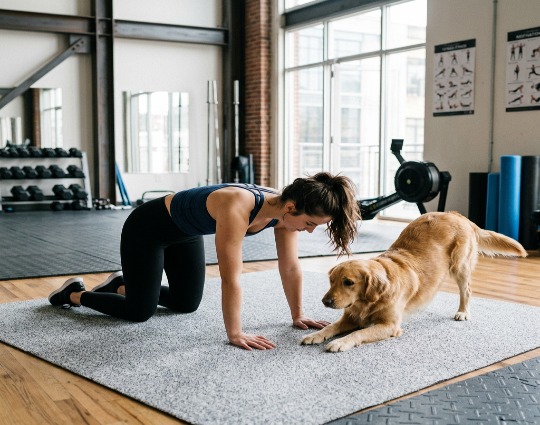
Most dog owners assume high-level exercise means launching a tennis ball across an open field until their canine companion collapses from exhaustion.
Yet, behind the scenes of modern canine athletics, high-intensity games of fetch are increasingly recognized as a prime recipe for soft-tissue tears, joint wear, and chronic repetitive-strain injuries.
True conditioning is not about mindlessly draining a dog’s battery; it iis a calculated, low-impact science designed to build core strength, balance, joint stability, and mental focus. A structured professional dog fitness session operates less like a frantic park sprint and more like an elite athlete’s personal training hour, transforming raw kinetic energy into functional longevity.
The Biomechanics of Weight Distribution: Rebalancing the “Front-Heavy” Body
To understand why structured exercise is necessary, one must first look at basic canine physics and weight mechanics. Biomechanical research confirms that standing dogs naturally support roughly 60% to 63% of their total body weight on their forelimbs.
This front-heavy bias expands dramatically during high-speed activities—such as landing jumps or hard braking—where front limbs absorb forces equivalent to multiple times the dog’s body weight. Left strictly to unguided activities like running or fetch, a dog’s powerful hindquarters often remain chronically under-conditioned relative to their front end.
A core objective within a professional dog fitness session is actively shifting weight rearward to correct this imbalance. Practitioners utilize specialized incline angles, controlled backward stepping, and elevated target work to force the hamstrings, gluteals, and hip flexors to engage.
Shifting load to the hindlimbs builds balanced muscle symmetry, relieves chronic stress on the shoulder joints, and safeguards front limbs against early joint degeneration and repetitive-strain injuries. If you are debating how to fulfill your dog’s daily physical demands, it helps to understand whether a Dog Fitness Trainer or Walker: Which Does Your High-Energy Pup Actually Need? to reach these biomechanical goals.
Phase 1: Baseline Diagnostics & The Dynamic Warm-Up

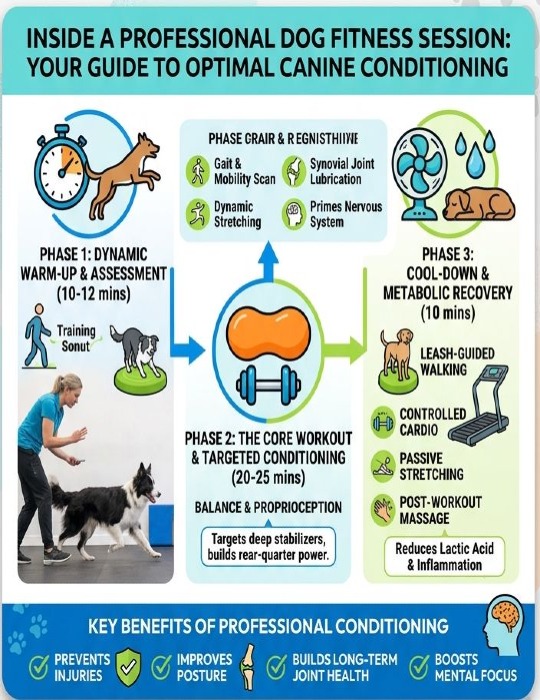
Every appointment kicks off with a baseline assessment and dynamic warm-up phase lasting roughly ten to twelve minutes. Jumping straight into high-powered physical work with cold muscles invites disaster.
During this initial phase, a certified fitness practitioner evaluates the dog’s gait, joint range of motion, and resting heart rate. The dog is then guided through dynamic stretches, passive range-of-motion (PROM) movements, and controlled low-speed gaiting across varied surfaces.
This process gradually raises internal muscle temperature, lubricates the joints with synovial fluid, and primes the central nervous system for complex physical demands.
Sports Science & Injury Prevention: What Veterinary Statistics Show
The clinical necessity for proper warm-ups and structured conditioning is reinforced by data from modern sports medicine.
Large-scale internet surveys of over 4,000 agility and sporting dogs published in the Journal of the American Veterinary Medical Association revealed that 41.7% suffered at least one orthopedic injury during their active careers.
Soft-tissue damage predominated, with injuries occurring most frequently in the shoulder region (30.1% of injured dogs) and the iliopsoas muscle (19.4%).
These acute strains often stem from explosive accelerations, sudden slips, or landing on cold muscles. Incorporating targeted stabilizer conditioning and dynamic warm-up routines substantially reduces these risks, giving high-drive and active family dogs the structural resilience needed to absorb unexpected twists, turns, and impacts safely.
Phase 2: Core Workout & Targeted Conditioning
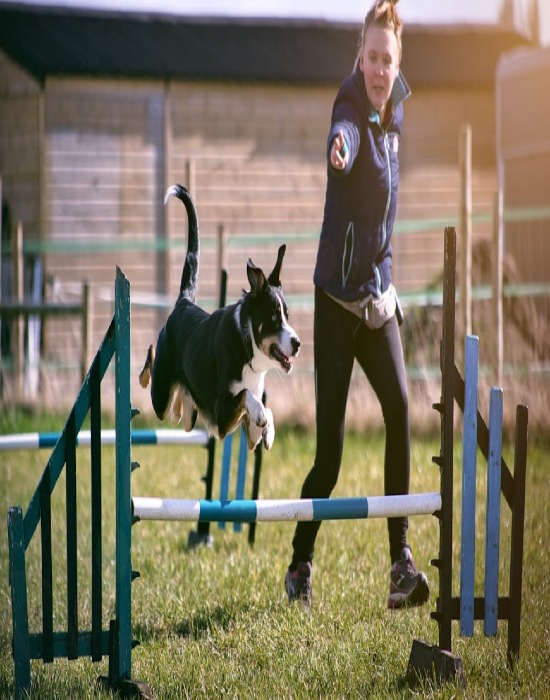
Once warmed up, the dog transitions into the core workout and targeted conditioning phase, which usually spans 20 to 25 minutes. Rather than relying on mindless cardio, this phase heavily incorporates proprioception equipment—inflatable balance discs, peanut balls, balance pods, and wobble boards—that force the deep stabilizing muscles along the spine and core to engage continuously.
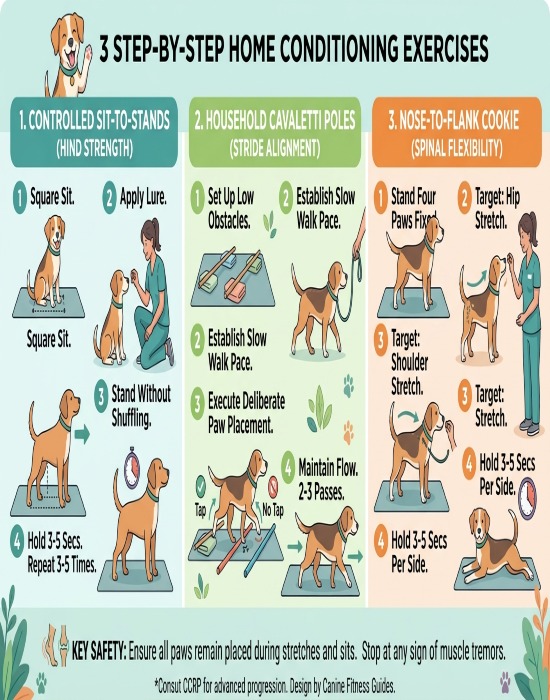
A practitioner might set up cavaletti poles spaced at exact anatomical distances to regulate the dog’s stride and encourage joint flexion, or utilize controlled “doggie squats” (sit-to-stands on elevated, unstable surfaces) to target the quadriceps and gluteal muscles.
Cardio elements are integrated with clinical precision—sometimes utilizing non-motorized slatmills or underwater treadmills where water level and belt speed are adjusted down to the millimeter to offer low-impact resistance without pounding sensitive joints.
While professional equipment yields maximum precision, owners can explore these 3 Dog Fitness Exercises You Can Do at Home (And 3 You Should Leave to a Pro) To complement official conditioning sessions safely.
Fatigue Detection: Neurological Burnout vs. Physical Exhaustion
What truly sets a professional trainer apart during these exercises is an absolute mastery of canine biomechanics and fatigue detection.
Unlike humans, dogs frequently hide pain and will push past physical limits to please their handlers or get a reward. Trainers constantly screen for subtle micro-signs of physical and mental exhaustion, including:
- Biomechanical Compensations: Tipping slightly onto one hip during a sit, wide-based stances, or elbows kicking outward during balance work.
- Gait Anomalies: Switching from a clean trot to a pacing gait, or offloading weight unevenly across limbs.
- Neurological & Mental Fatigue: Sniffing the ground suddenly, delayed responses to simple cues, loss of precision on stable equipment, or sudden hyperactive “zoomies” triggered by over-stimulation.
This last point highlights an important concept: neurological fatigue (“Brain Drain”). Balancing on dynamic inflatable equipment requires intense central nervous system (CNS) activation and spatial awareness.
Just ten to fifteen minutes of deliberate balance work forces the brain to process constant micro-adjustments, creating a level of deep mental fatigue that a 45-minute casual walk simply cannot match.
Managing physical and emotional stress during training is also crucial when addressing behavioral challenges, as discussed in Dog Training Tips for Aggressive Behavior: The Ultimate Guide.
Phase 3: Cool-Down Protocols & Recovery

The final ten minutes of the session focus entirely on the cool-down and recovery process. Stopping abruptly after an intense physical routine causes blood pooling and delays the clearance of metabolic waste, such as lactic acid, from the muscle tissue.
A proper recovery protocol involves slow, leash-guided walking to gradually drop the heart rate back to baseline. This is followed by targeted passive stretching for major muscle groups like the hamstrings, hip flexors, and shoulders, and often finishes with light canine massage, passive manual compression, or cold therapy to minimize post-workout inflammation.
Key Takeaways
- Quality Over Quantity: A 30-minute structured session focuses on core stability and joint health rather than mindless exhaustion.
- Rear-Quarter Engagement: Correcting the dog’s natural 60/40 front-weight bias prevents premature joint degeneration and shoulder injuries.
- Neurological Fatigue: Balancing equipment engages the central nervous system, delivering deep mental stimulation that burns energy safely.
- Injury Reduction: Dynamic warm-ups and passive cool-downs protect against common soft-tissue injuries like iliopsoas and shoulder strains.
Final Thoughts
Investing in a professional dog fitness session is ultimately one of the most effective ways to safeguard your dog’s long-term health, whether you are conditioning a high-drive working breed or protecting a senior dog against muscle atrophy. Far from a simple playdate, these structured appointments build a resilient body, sharpen brain function, and ensure your dog stays active and pain-free for years to come.
Frequently Asked Questions (FAQs)
How often should my dog attend a professional fitness session?
For most healthy dogs, 1 to 2 sessions per week are ideal for building strength and endurance without risking overtraining. Working or sporting dogs in peak conditioning cycles may follow a tailored regimen designed by their certified practitioner.
Is a fitness session safe for puppies or senior dogs?
Yes, but the routine is completely customized. Puppies under 18 months focus strictly on low-impact body awareness and confidence building to protect open growth plates. Senior dogs focus on gentle range-of-motion work, preserving muscle mass (countering sarcopenia), and maintaining balance to prevent falls.
What is the difference between a dog walker and a canine fitness trainer?
A dog walker provides general daily movement, potty breaks, and mental stimulation through neighborhood walking. A certified canine fitness trainer uses specialized equipment and biomechanical principles to target specific muscle groups, improve posture, and prevent sports injuries.
What qualifications or certifications should I look for in a canine fitness professional?
Look for practitioners certified through accredited prografms such as the Certified Canine Fitness Trainer (CCFT) program or the Canine Rehabilitation Practitioner (CCRP) credential. These certifications ensure the trainer has formal training in canine anatomy, exercise physiology, biomechanics, and injury prevention protocols.
Can structured fitness sessions help dogs recovering from injury or surgery?
While fitness conditioning builds strength and resilience, post-injury or post-surgical dogs should first complete a clinical rehabilitation program with a veterinary rehabilitation therapist. Once medically cleared, a professional fitness session can help maintain muscle conditioning, core stability, and long-term joint health.


Follow Us
-
-
Everything You Need to Know: Proven Dog Rescue Tips for Rescue Dogs
Bringing home a shelter canine is one of the most transformative experiences a pet parent can have, […]
-

A Complete Checkup for Dogs Guide: Why Annual Dog Checkups are Non-Negotiable
The soft thud of a tail wagging against the floor, the comforting warmth of a furry head […]
-

The Importance of Regular Vaccinations for Dogs: Why Visiting a Dog Vaccine Clinic Near Me is Crucial
Imagine the heart-wrenching situation where your beloved dog, who is always full of life and energy, becomes […]
-

Best Dog for Family and Guard: Top 5 Breeds That Balance Family Love with Home Security
Selecting a canine companion is a decision that shapes the next decade of your home life, especially […]
-

Post-Vaccine Care for Dogs: Side Effects, Recovery & Care Tips
Vaccinations play a crucial role in protecting your dog from serious diseases, but just like humans, dogs […]
-

Comprehensive Guide to Dog Clinics: Services and Benefits
When it comes to ensuring the health and happiness of our furry friends, finding a reliable and […]
Local Ads
