5 Signs Your Pup is Overdue for a Dental Checkup for Dogs

There is a persistent myth in the pet-owning world that “dog breath” is simply an unavoidable side effect of owning a canine companion. While it is true that a dog’s mouth won’t ever smell like minty fresh wildflowers, a truly foul or pungent odor is actually one of the primary indicators that your pet is suffering from underlying oral disease.
Most veterinarians agree that by the age of three, approximately 80% of dogs show some clinical signs of periodontal disease. Because dogs have evolved as pack animals to hide physical pain to avoid appearing vulnerable, they rarely whimper or cry out when a tooth aches. Instead, the burden falls on the owner to recognize the subtle shifts in hygiene and behavior that signal a professional dental checkup for dogs is no longer just a recommendation, but a medical necessity for their long-term health.
1. Chronic Halitosis (The “Dragon Breath” Factor)
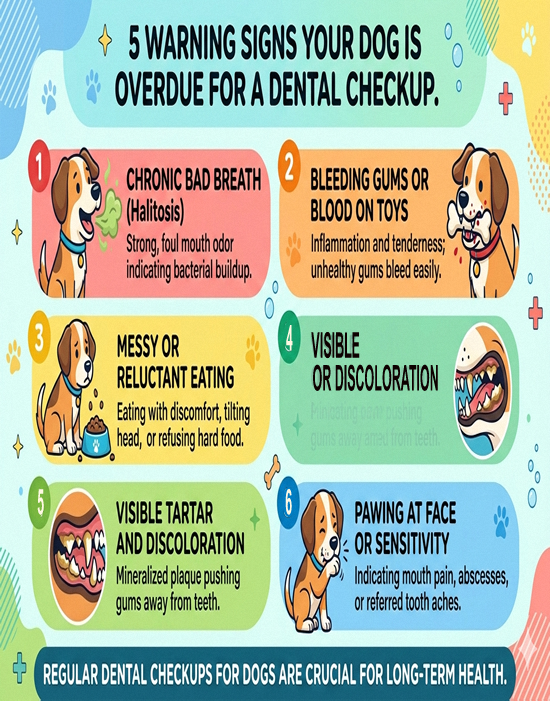
The most common sign that a dog is overdue for professional intervention is halitosis that doesn’t resolve after a meal or a drink of water. While many owners dismiss a “garbage-like” smell as a quirk of their dog’s diet, it is actually the result of volatile sulfur compounds produced by massive colonies of anaerobic bacteria living under the gumline.
When plaque—a sticky film of bacteria—is left on the teeth for as little as 48 hours, it begins to mineralize into tartar, or calculus. This hard substance creates a “coral reef” for more bacteria to hide in, eventually leading to infection and decay. If your dog’s breath makes you want to recoil during a cuddle session, it is a clear biological signal that an active infection is likely present and requires a deep cleaning that only a vet can provide.
2. The Discovery of Blood on Toys or Bedding

Finding a small smear of blood on a white rope toy or a tennis ball is a significant red flag that often catches owners off guard. Healthy gingival tissue (the gums) should be a vibrant, healthy pink and should not bleed under the normal pressure of play or chewing. If the gums bleed easily, it indicates a state of gingivitis, where the tissue is so inflamed and engorged with blood that the slightest friction causes a rupture.
Left untreated, this inflammation leads to the recession of the gums and the destruction of the bony structures holding the teeth in place. A professional dental checkup for dogs allows a vet to probe these areas to see if the “pockets” around the teeth have become dangerously deep, threatening the stability of the entire jaw.
3. Changes in Eating Habits and “Messy” Chewing

Pet owners often mistake a change in eating habits for “pickiness” or aging, but it is frequently a calculated response to oral pain. You might notice your dog dropping pieces of kibble back into the bowl, tilting their head to one side while they chew, or suddenly losing interest in hard treats they used to love.
In some cases, a dog might even approach their food bowl with enthusiasm—showing they are hungry—but then back away after the first bite because the contact triggered a sharp nerve pain. This is a classic sign of a fractured tooth or a painful abscess. When a dog switches from being a “gulper” to a “messy eater,” they are essentially trying to navigate a minefield of sensitivity in their mouth.
4. Visible “Tartar Towers” and Gum Recessions

If you gently lift your dog’s lip and see thick, brownish-grey deposits covering the upper molars, your dog has moved past the point where at-home brushing can help. These “tartar towers” act like a wedge, slowly pushing the gum tissue away from the tooth root. Once the root is exposed, the tooth becomes hyper-sensitive to temperature and pressure, much like a human cavity.
You may also notice a distinct red line along the margin where the tooth meets the gum. This is the body’s immune system desperately trying to fight off the bacterial invasion. Unlike soft plaque, tartar is a rock-hard mineral deposit that requires ultrasonic scaling during a professional dental procedure to be safely removed without damaging the enamel.
5. Facial Sensitivity and Pawing at the Mouth

A dog that suddenly becomes “head shy” or pulls away when you try to scratch their chin may be suffering from significant dental distress. You might observe your dog pawing at their muzzle or rubbing their face aggressively against the carpet or furniture. While this can sometimes be attributed to allergies, it is often a sign of “referred pain”—a deep, throbbing ache coming from a tooth root that has become infected.
In severe cases, you may even see swelling just below the eye, which is a common sign of a carnassial tooth root abscess. By the time physical swelling is visible on the outside of the face, the infection has likely spread deep into the maxillary sinus, making immediate veterinary intervention a priority.
The Importance of Preventative Care

Ignoring these signs doesn’t just lead to tooth loss; it puts a massive strain on your dog’s vital organs. Every time a dog with periodontal disease chews, bacteria are pumped into their bloodstream, where they can travel to the heart, kidneys, and liver, causing microscopic damage over time.
This is why a regular dental checkup for dogs is considered a cornerstone of geriatric and adult pet care. By addressing plaque and tartar through a professional cleaning before it turns into a systemic infection, you are effectively extending your dog’s lifespan and ensuring their senior years are spent in comfort rather than silent pain. Taking action at the first sign of a “smelly kiss” is the best way to keep your pup’s tail wagging for years to come.
The Silent Impact on Vital Organs

It is a medical misconception that dental disease stays confined to the mouth; in reality, the mouth serves as a gateway to the rest of the body. When a dog develops advanced periodontal disease, the protective barrier of the gum tissue becomes porous and inflamed. Every time your dog chews a toy or eats their dinner, subgingival bacteria are essentially “pumped” into the bloodstream—a process known as transient bacteremia.
Research in veterinary medicine has shown a direct correlation between chronic oral infection and inflammatory changes in the heart valves (endocarditis), the filtration system of the kidneys, and the functional tissues of the liver. These organs are forced to constantly filter out bacteria and their associated toxins, leading to premature aging and organ failure.
By prioritizing a dental checkup for dogs, you aren’t just cleaning teeth; you are actively protecting your dog’s heart and kidneys from the long-term damage caused by a constant “seeding” of infection from the oral cavity.
Key Takeaways for Pet Parents
- 80% Threshold. Most dogs show signs of dental disease by age three; proactive screening is better than reactive surgery.
- Pain is Quiet. Dogs rarely cry out from toothaches; look for behavioral shifts like “messy eating” or face-rubbing instead.
- Color Matters. Healthy gums are bubblegum pink. Bright red, bleeding, or receding gums indicate active infection.
- Systemic Connection. Poor oral health is linked to heart, liver, and kidney disease due to bacteria entering the bloodstream.
- Professional vs. Home Care. Brushing prevents plaque, but only a vet can remove hardened tartar (calculus) during a professional dental checkup for dogs.
Frequently Asked Questions (FAQs)
1. How often should my dog have a professional dental cleaning?
Most veterinarians recommend an annual dental exam and cleaning, though smaller breeds or dogs prone to rapid tartar buildup may require a checkup every six months.
2. Is anesthesia necessary for a dog’s dental cleaning?
Yes. To safely clean under the gumline (where the real disease hides) and take accurate X-rays without causing the dog stress or pain, general anesthesia is the gold standard for safety and thoroughness.
3. Can I just use dental chews instead of a vet visit?
Dental chews are a great supplemental tool for scraping away soft plaque, but they cannot remove hardened tartar or treat infections already established under the gums.
4. What is the average cost of a dental checkup for dogs?
Costs vary widely based on your location and the dog’s health, typically ranging from $300 to $1,000+. This usually includes the exam, anesthesia, cleaning, and sometimes X-rays, though extractions will increase the total.
5. Will my dog be able to eat if they need teeth extracted?
Absolutely. Most dogs eat much better after a painful, infected tooth is removed. Once the gums heal, even dogs with no teeth can often eat softened kibble or wet food without any issues.


Follow Us
-
-

How to Get a Healthy, Shiny Coat on Your Dog: The Ultimate Guide
There is nothing quite like running your hands through a dog’s coat and feeling that velvety, thick, […]
-

Why Older Dogs Rule: Key Benefits of Adopting a Senior Dog
When people picture bringing a new pet into their home, the mental image is almost always dominated […]
-

A Comprehensive Vaccine Guide: Everything You Need to Know About Dog Vaccinations
Vaccinating your dog is one of the most important steps in ensuring their long-term health and protection […]
-

Dog Training Tips for Aggressive Behavior: The Ultimate Guide
Discovering that your companion exhibits reactive or aggressive tendencies can be a profoundly isolating and overwhelming experience […]
-

Dog Home Vaccination Made Easy: A Safe & Stress-Free Guide for Pet Parents
Caring for a dog comes with immense joy, but it also carries serious responsibilities — and vaccinations […]
-
5 Signs Your Pup is Overdue for a Dental Checkup for Dogs
There is a persistent myth in the pet-owning world that “dog breath” is simply an unavoidable side […]
Local Ads
