Is It Time to Upgrade? 3 Dog Fitness Exercises You Can Do at Home (And 3 You Should Leave to a Pro)
If your daily routine consists solely of a thirty-minute stroll around the block, your companion might be missing out on the critical core stability and joint conditioning necessary for lifelong mobility.
Veterinary clinical data highlights that over 50% of adult dogs in North America are classified as overweight or obese, a statistic that drastically elevates the incidence of cranial cruciate ligament (CCL) tears and early-onset osteoarthritis.
While casual sidewalk walking offers baseline cardiovascular stimulation, it rarely engages the stabilizing micro-muscles surrounding the spine, hips, and knees.
Integrating a targetedlallows pet owners to proactively strengthen these key muscle groups, turn living rooms into physical conditioning hubs, and build a resilient body that resists common orthopedic injuries.
Safe & Low-Impact Exercises to Do at Home
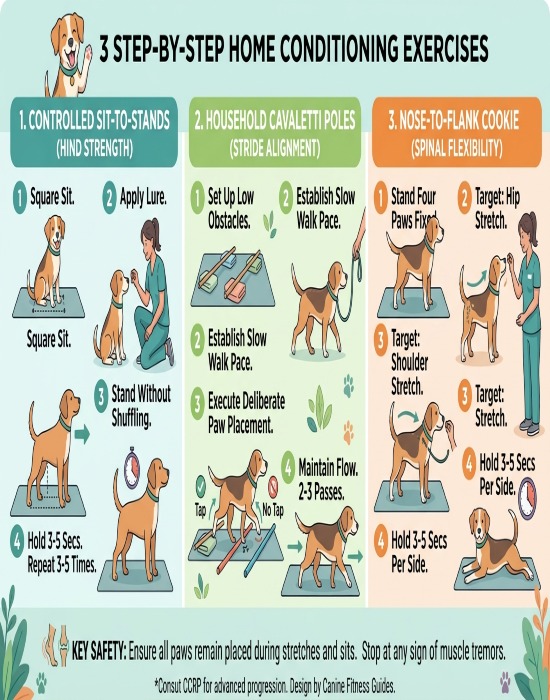
1. Controlled Sit-to-Stands (Hind Leg Strength)
The beauty of beginning a home conditioning regimen lies in utilizing zero-cost household items to execute low-impact movements.
Controlled sit-to-stand drills—frequently referred to as “doggy squats”—specifically target the quadriceps, hamstrings, and gluteal muscles.
By guiding your dog from a square sit to a full stand using a high-value lure without allowing their hind paws to drift backward, you force the rear assembly to bear the full weight of propulsion.
2. Household Cavaletti Poles (Awareness & Stride Alignment)
Another exceptionally versatile dog fitness exercise you can do at home involves setting up a makeshift Cavaletti ladder using rolled towels, broomsticks, or low yoga blocks spread out along a hallway.
Walking your dog slowly over these minor obstacles forces them to execute deliberate limb lifting rather than mindlessly pacing, directly training their proprioception—the neurological awareness of where their paws are in space—which naturally declines as dogs age.
3. Nose-to-Flank Cookie Stretches (Spinal Flexibility)
Flexibility and spinal extension complete the trio of safe indoor conditioning routines. Nose-to-flank stretches, commonly called “cookie stretches,” provide an ideal active recovery tool to maintain lateral spinal movement.
By positioning yourself alongside your standing dog and using a treat to lure their nose gently toward their hip, shoulder, or rear paw—ensuring all four feet remain planted firmly on the rug—you stretch the epaxial muscles along the spine while building lateral abdominal strength.
Practicing this specific dog fitness exercise you can do at home for three to five seconds per side helps counteract the stiffness associated with repetitive straight-line walking.
Advanced Exercises Best Left to a Professional
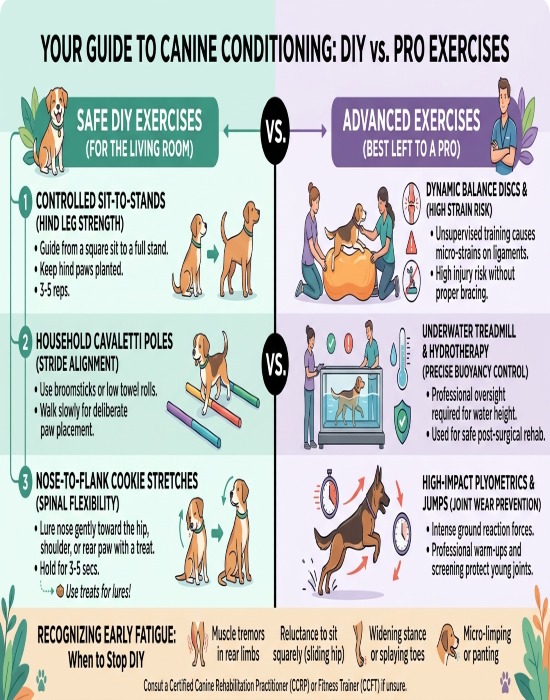
1. Dynamic Balance Discs & Inflatables (High Strain Risk)
Despite the obvious convenience of home workouts, pushing beyond foundational movements without professional overwatch introduces significant injury risks.
Canine rehabilitation specialists warn against unsupervised training on unstable surfaces, such as high-clearance inflatable balance discs or peanut balls.
When an untrained dog steps onto dynamic, air-filled apparatuses, their stabilizing ligaments endure massive micro-strains.
If the handler fails to manually brace the dog’s hips or alignment, the body compensates by gripping with the wrong muscle groups, potentially aggravating existing spinal subluxations or causing acute ligament tears.
2. Underwater Treadmill & Hydrotherapy (Precise Buoyancy Control)
Advanced aquatic conditioning belongs exclusively in a clinical setting under certified practitioners.
Underwater treadmills require precise control over water height; filling the tank to chest level reduces weight-bearing load by nearly 30 to 38%.
This is crucial for post-surgical rehab, whereas shallow water increases joint flexion demands and can strain healing tissue if applied incorrectly.
3. High-Impact Plyometrics & Jumps (Joint Wear Prevention)
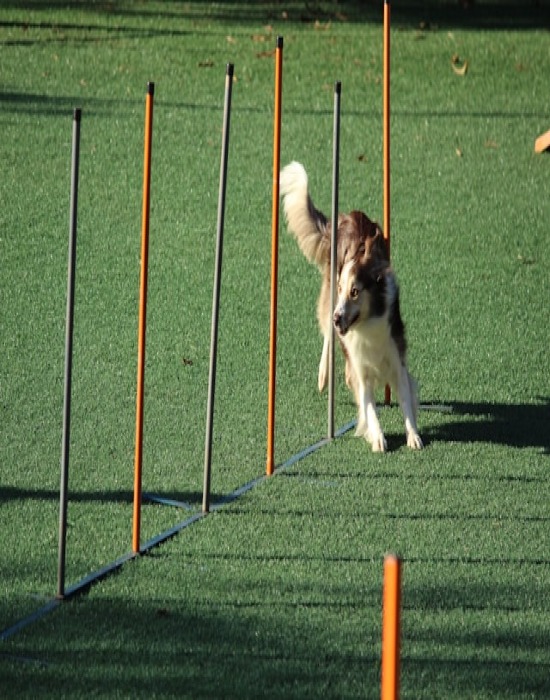
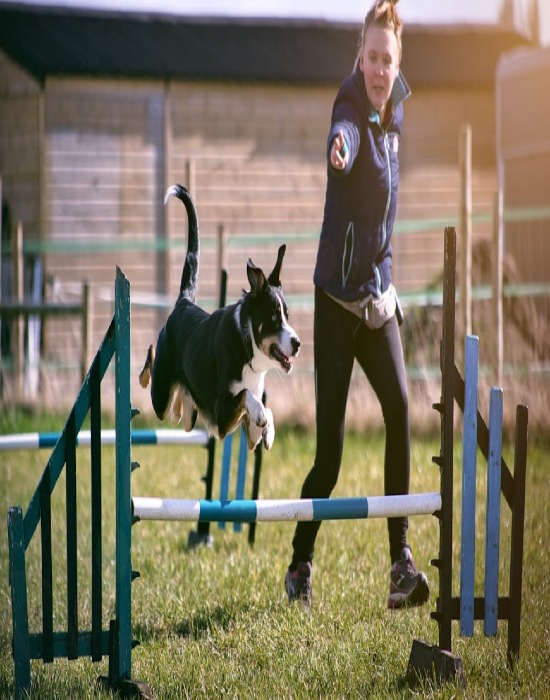
High-impact jump drills or repetitive agility hurdles introduce intense ground reaction forces that accelerate joint degradation in young or predisposed breeds.
Knowing when your home routine requires expert support ensures high-tier athletic conditioning never compromises structural longevity.
If you are struggling to balance your dog’s athletic needs with your work schedule, evaluating a Dog Fitness Trainer or Walker: Which Does Your High-Energy Dog Actually Need?
can help you determine the exact level of external care your pup requires.
Recognizing Early Fatigue and Injury Red Flags
Recognizing fatigue cues early remains the ultimate responsibility during any home routine. Stop immediately and consult a professional if you observe any of the following warning signs:
- Muscle trembling or quivering in the rear limbs during static holds
- Reluctance to sit squarely, opting instead to slide out on one hip
- Widening stance or splaying toes to compensate for balance loss
- Micro-limping, panting excessively, or turning away from lures.
Key Takeaways
- Cardio vs. Conditioning: Standard walks satisfy daily bathroom needs and baseline mental stimulation, but targeted home exercises build core stability, joint health, and structural longevity.
- Safety First: Low-impact exercises (sit-to-stands, low cavalettis, cookie stretches) are safe for living room DIY workouts, while dynamic unstable balance equipment, hydrotherapy, and plyometrics require professional supervision to prevent severe injury.
- Service Matching: High-energy dogs often require a combination of structured exercise and mental engagement—making it vital to understand when to hire a dedicated Dog Fitness Trainer or Walker: Which Does Your High-Energy Dog Actually Need? to match their physical demands.
- Fatigue Awareness: Stop any home exercise session immediately if you observe muscle tremors, irregular sitting postures, toe splaying, or subtle limping.
Final Thoughts
Mastering a basic dog fitness exercise you can do at home gives your companion a tremendous physical advantage, transforming passive downtime into purposeful strength building.
By combining low-impact home drills with the expertise of veterinary physical therapists for high-level equipment, you create a balanced, safe conditioning pathway that protects joints, enhances mobility, and keeps your dog thriving for years to come.
FAQs
How often should I practice at-home fitness exercises with my dog?
Aim for 2 to 3 short sessions per week. Canine muscles need recovery time to adapt and repair, so avoid back-to-back heavy conditioning days. Keep sessions around 5 to 10 minutes total to prevent mental and physical fatigue.
Can puppies perform home conditioning exercises safely?
Low-impact spatial awareness drills like ground-level Cavalettis and gentle cookie stretches are safe for growing puppies. However, avoid repetitive sit-to-stands or any jumping until their growth plates fully close (typically between 12 and 18 months of age, depending on the breed).
What equipment do I need to start doing canine exercises at home?
You don’t need expensive gear. Household items like rolled towels, broomsticks, yoga blocks, non-slip rugs, and high-value treats are all you need to execute effective, low-risk conditioning routines.
How do I know if my high-energy dog needs a fitness trainer instead of a walker?
A walker provides essential potty breaks, mental stimulation, and steady cardio.
A fitness trainer or rehab specialist focuses on targeted muscle conditioning, gait correction, and athletic development.
For a deeper breakdown of which service fits your lifestyle, check out our guide on whether a Dog Fitness Trainer or Walker is right for your home.
Follow Us
-
-

Everything You Need to Know: Proven Dog Rescue Tips for Rescue Dogs
Bringing home a shelter canine is one of the most transformative experiences a pet parent can have, […]
-

Dog Urine Color and Kidney Health: How to Spot Renal Disease Before It’s Too Late
Monitoring dog urine color and kidney health is one of the most effective, non-invasive daily habit shifts […]
-

A Comprehensive Vaccine Guide: Everything You Need to Know About Dog Vaccinations
Vaccinating your dog is one of the most important steps in ensuring their long-term health and protection […]
-

Dog Sitting Tips Nobody Tells You (But Every Owner Wishes You Knew)
Think ‘dog sitting tips’ and you probably picture endless cuddles on the couch and joyous romps in […]
-

Dog Shots Side Effects: What Vets Don’t Always Tell You
Every year, millions of dog owners take their furry friends to the vet for vaccinations, trusting the […]
-

Can Dogs Eat Eggs? Benefits, Risks, and Serving Tips
Eggs are often called nature’s multivitamin, and it’s no surprise why. Packed with protein, essential amino acids, […]
Local Ads
