Dog Urine Color and Kidney Health: How to Spot Renal Disease Before It’s Too Late

Monitoring dog urine color and kidney health is one of the most effective, non-invasive daily habit shifts a pet owner can adopt to catch life-threatening renal decline in its infancy. Chronic Kidney Disease (CKD) is often described as a silent killer in veterinary medicine because canine nephrons—the functional filtering units within the kidneys—possess a massive compensatory capacity.
In fact, standard blood markers like Blood Urea Nitrogen (BUN) and traditional serum creatinine typically do not spike until roughly 66% to 75% of total functional renal tissue has already been permanently destroyed.
By paying close attention to subtle shifts in the concentration, tint, and clarity of your dog’s urine—and referencing our detailed guide on Dog Urine Color Kidney Failure: What Does Your Dogs Urine Color Mean?—you gain a vital window of opportunity to intervene before irreversible damage occurs, turning routine daily walks into an indispensable diagnostic check.
The Science of Canine Urine Production and Filtration
To understand why color changes occur, it helps to understand how a healthy canine urinary tract functions.
Under normal physiological conditions, the kidneys continuously filter metabolic waste products, excess electrolytes, and cellular debris from the bloodstream while meticulously regulating systemic hydration. The functional units responsible for this complex process, called nephrons, reabsorb roughly 99% of the water filtered through the glomeruli back into circulation.
When a dog’s kidneys are functioning at peak performance, the excreted waste yields a clear, straw-yellow fluid, primarily colored by urochrome—a natural pigment derived from the metabolic breakdown of hemoglobin.
When renal parenchyma experiences structural damage due to aging, congenital defects, toxins, or chronic inflammation, the nephrons lose their ability to concentrate urine. This leads to significant changes in fluid volume and pigment intensity long before obvious systemic illness becomes apparent.
Decoding the Color Palette: What Your Dog’s Urine Reveals
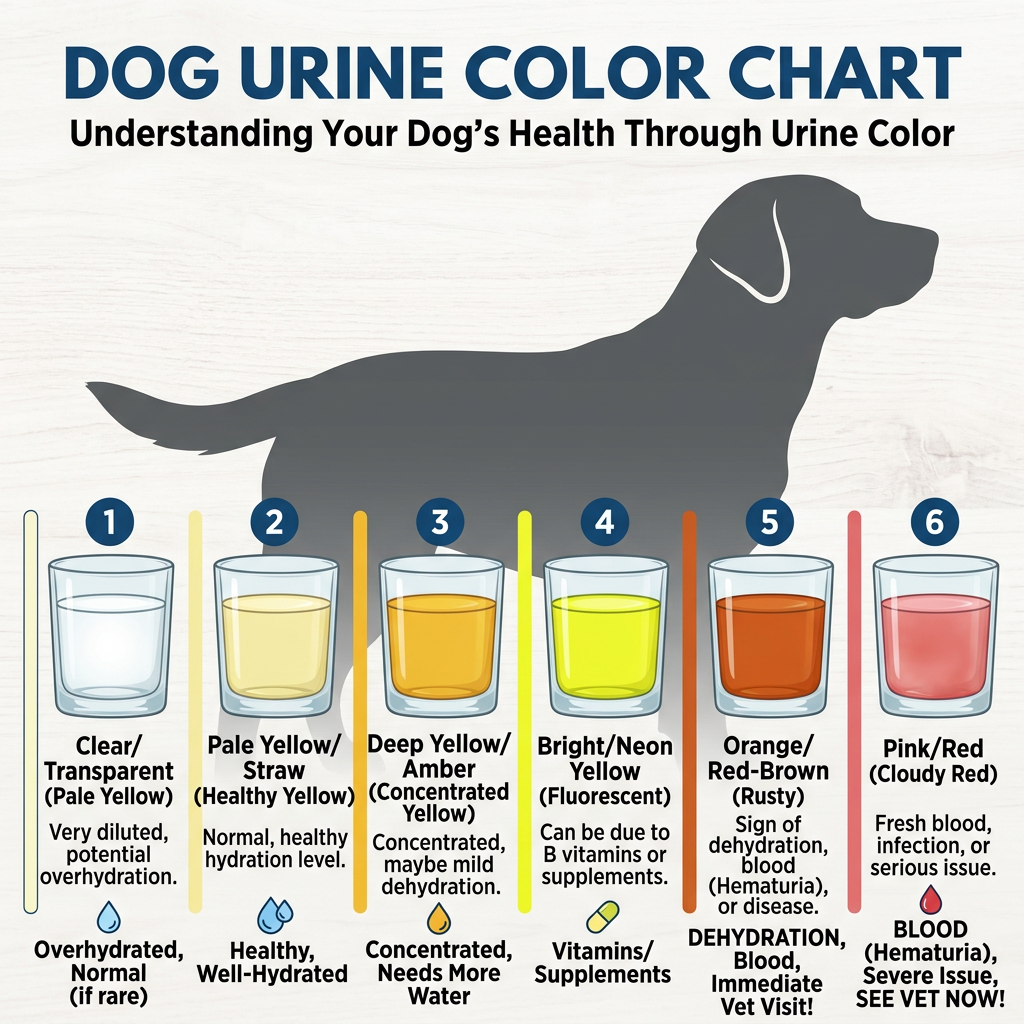
Understanding the direct connection between dog urine color and kidney health requires recognizing the specific clinical red flags that signal internal distress.
While environmental factors like temporary dehydration or dietary pigments can occasionally shift urine shade, persistent abnormalities point directly to metabolic or anatomical pathology.
For an itemized visual breakdown of each specific shade, see our comprehensive chart in Dog Urine Color Kidney Failure: What Does Your Dogs Urine Color Mean?
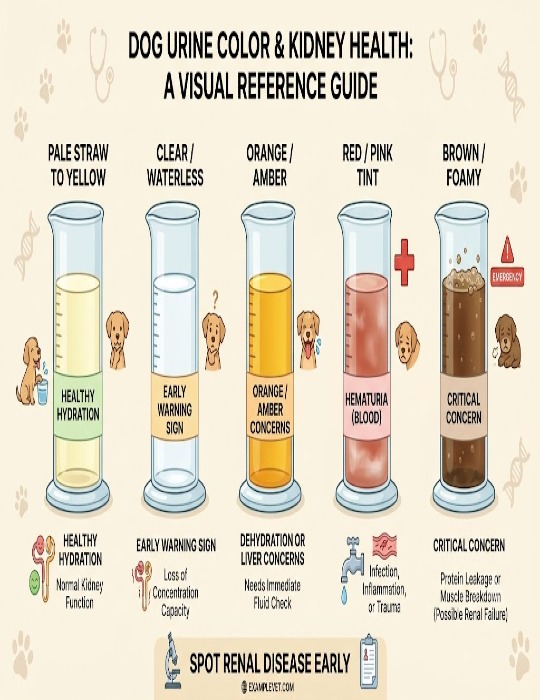
- Clear, Colorless, or Watery Urine: While crystal-clear urine might look clean, persistent, diluted urine is frequently the very first outward sign of early-stage renal failure. When kidneys lose their ability to concentrate urine, the body excretes vast amounts of water without adequately filtering toxins, driving a classic cycle known as Polyuria and Polydipsia (PU/PD)—excessive urination coupled with compensatory thirst.
- Bright Red, Pink, or Tea-Colored Urine: The presence of intact red blood cells (hematuria) or hemoglobin (hemoglobinuria) turns urine shades of pink, dark red, or rust brown. While this often stems from lower urinary tract infections or bladder stones, red urine can also signal acute glomerulonephritis, severe renal trauma, or renal carcinomas.
- Dark Amber or Concentrated Orange: Extremely concentrated urine typically indicates severe dehydration, which induces prerenal azotemia—a condition where reduced blood flow to the kidneys temporarily starves nephrons of vital oxygen. If hydration does not quickly restore the color to straw yellow, underlying liver disease or bilirubin accumulation must be evaluated.
- Cloudy, Turbid, or Foamy Appearance: Healthy canine urine should always be transparent. Cloudy urine often indicates a heavy burden of white blood cells, bacteria, or cellular casts shedding directly from inflamed kidney tissues. Foamy urine, on the other hand, is a classic physical sign of persistent proteinuria—a condition where damaged kidney filtration membranes leak vital blood proteins like albumin into the urinary waste stream.
Here is the new subsection, crafted to integrate smoothly into the existing article while optimizing for SEO and keeping the overall word count balanced.
Monitoring Techniques: How to Accurately Inspect Urine in Any Environment
Properly evaluating dog urine color and kidney health requires an accurate visual assessment, which can be challenging when your dog regularly urinates on dark grass, soil, asphalt, or dense snow.
Environmental background colors frequently distort the true tint and clarity of a sample, leading owners to misinterpret clear urine for normal yellow, or completely miss subtle pink, orange, or cloudy flags.
To bypass environmental interference and establish a clean baseline, adopt these practical monitoring methods during your routine daily walks:
- The White Paper Towel Test: Gently slide a plain white paper towel or a white paper plate directly under your dog’s urine stream as they void. Absorbing the fluid onto a neutral white background immediately reveals the true color depth, subtle red hues, or cloudiness that would otherwise disappear into the grass.
- The Clean Catch Container Method: For a definitive look at clarity, catch a small mid-stream sample using a transparent, disposable plastic cup. Holding the sample up to natural sunlight allows you to easily evaluate transparency, observe protein foam at the surface, or spot microscopic cellular sediment.
- Snow and Winter Checks: While snow provides a light backdrop, deep or dirty snow can dilute pigment or introduce soil particles. Always inspect freshly dropped urine on clean, packed white snow immediately before it sinks or mixes with environmental contaminants.
Modern Diagnostic Benchmarks and Early Detection Strategies

When changes in urine appearance prompt a veterinary visit, standard diagnostic protocols rely on precise numerical markers rather than visual assessment alone. Veterinarians evaluate Urine Specific Gravity (USG) using a refractometer to measure the kidney’s concentrating ability.
A healthy dog’s USG typically ranges between 1.015 and 1.045, whereas dogs suffering from impaired renal function often showcase a “fixed” USG reading between 1.008 and 1.012 (isosthenuria)—indicating that the urine is neither concentrated nor diluted by the renal tubules.
In addition to urinalysis, modern veterinary medicine utilizes advanced screening tools like the Symmetric Dimethylarginine (SDMA) biomarker test. Unlike serum creatinine, which fluctuates based on a dog’s muscle mass and body condition, SDMA concentrations accumulate in the bloodstream when as little as 25% to 40% of kidney function has declined.
This allows veterinarians to detect kidney dysfunction 9 to 17 months earlier than traditional blood panels, dramatically expanding the timeframe for targeted therapeutic intervention.
Key Takeaways
- Visual Vigilance Matters: Dilute, persistent clear or watery urine is often a primary warning sign of early-stage canine kidney disease, indicating that the nephrons are losing their ability to concentrate waste products.
- Act Quickly on Red Flags: Cloudy, foamy, pink, or dark brown urine signals serious protein leakage, internal bleeding, or severe systemic inflammation that warrants immediate veterinary intervention.
- Inspect on a Neutral Surface: Use the “White Paper Towel” or clear cup method to accurately gauge your dog’s true urine clarity and tint, as dark grass, soil, or asphalt can mask critical warning signs.
- Prioritize Advanced Diagnostics: Pair routine at-home visual checks of dog urine color and kidney health with annual veterinary diagnostics, specifically asking for Urine Specific Gravity (USG) testing and early-detection SDMA blood panels.
Final Thoughts
Consistently evaluating dog urine color and kidney health empowers pet owners to step up as proactive advocates for their companion’s longevity. By recognizing early visual changes and seeking prompt diagnostic validation through USG and SDMA testing, you can slow disease progression, preserve precious renal function, and give your dog a happier, healthier life.
Frequently Asked Questions
How often should I monitor my dog’s urine color?
You should observe your dog’s urine color and stream daily during routine walks. Catching subtle shifts in color, transparency, or frequency early gives you the best chance of discovering underlying metabolic conditions before clinical illness presents.
Can dietary changes or supplements alter my dog’s urine color?
Yes. High doses of certain B-complex vitamins can temporarily turn urine a brighter yellow, while specific artificial dyes or food ingredients can cause minor color shifts. However, dietary changes will not cause persistent clear, cloudy, or bloody urine; any structural change in clarity or red-spectrum discoloration warrants a veterinary visit.
What is the best way to collect a urine sample for the vet?
Use a clean, shallow plastic container or a specialized collection pole to catch a mid-stream sample during your dog’s first morning walk. Ensure the sample is sealed and brought to your veterinary clinic within two hours (or kept refrigerated for up to 12 hours) to prevent bacterial growth and cellular breakdown from altering the test results.



Follow Us
-
-

How to Stop a Dog From Barking at Strangers: A Beginner’s Guide
Few sounds shatter a peaceful afternoon quite like the sudden, ear-splitting alarm of a barking dog. Whether […]
-

How Veterinary Nutritionists at a Dog Hospital Near Me Can Transform Your Dog’s Health
Taking your dog to a dog hospital doesn’t just involve regular check-ups and vaccinations, it also includes […]
-

How to Find Affordable Dog Vaccine Packages Near Me: A Budget-Friendly Guide for Pet Owners
Finding affordable dog vaccine packages is crucial for every pet parent who wants to provide the best […]
-

Dog Sitting Tips Nobody Tells You (But Every Owner Wishes You Knew)
Think ‘dog sitting tips’ and you probably picture endless cuddles on the couch and joyous romps in […]
-

Dog Shots Side Effects: What Vets Don’t Always Tell You
Every year, millions of dog owners take their furry friends to the vet for vaccinations, trusting the […]
-

Comprehensive Guide to Dog Clinics: Services and Benefits
When it comes to ensuring the health and happiness of our furry friends, finding a reliable and […]
Local Ads
