5 Effortless Ways to Improve Dog Dental Hygiene (Without Brushing!)
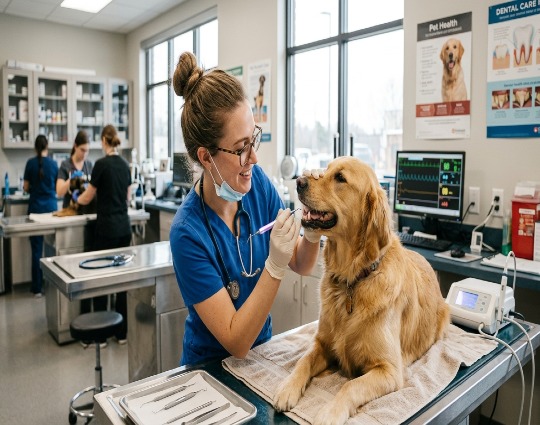
Maintaining optimal dog dental hygiene can often feel like an uphill battle for pet parents who are faced with wrangling an unwilling canine and a tiny toothbrush every single evening.
However, neglecting your companion’s oral health carries serious risks. Veterinary clinical data indicates that over 80% of dogs develop active periodontal disease by three years of age. What begins as mild plaque quickly hardens into stubborn tartar, seeding systemic inflammation that can spread through the bloodstream and compromise vital internal organs such as the heart, liver, and kidneys.
The good news is that achieving stellar daily care does not have to involve high stress or lengthy wrestling matches. Incorporating daily oral routines into a broader health routine—such as The Everyday Guide to Dog Preventive Health: Dental Care, Nutrition, Safety, Play & Behavioral Wellness—ensures your pet stays protected.
By leveraging mechanical chewing mechanics, targeted enzymes, and nutrient-dense natural foods, you can maintain a clean mouth effortlessly while saving thousands of dollars in professional veterinary scaling and extraction bills.
Way 1: Treat Them to VOHC-Approved Dental Chews and Sticks
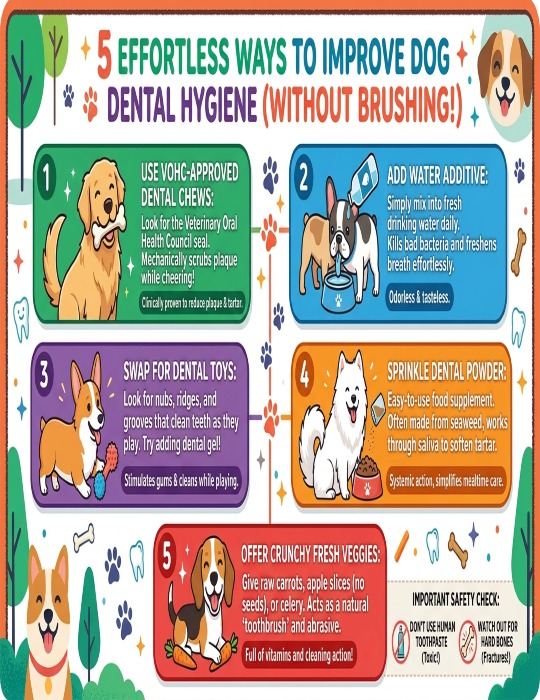
One of the simplest ways to elevate daily care is by letting your dog’s natural chewing instincts do the heavy lifting.
Specially textured dental chews create a mechanical scraping action that shears away soft plaque from enamel before it can calcify into stubborn tartar.
Additionally, the act of gnawing stimulates flow from the salivary glands, generating natural enzymes that help rinse away loose debris and neutralize harmful bacteria.
- Look for Clinical Validation: Always select treats bearing the Veterinary Oral Health Council (VOHC) Seal of Acceptance. This seal guarantees the product has been subjected to rigorous, peer-reviewed clinical trials demonstrating a minimum 20% reduction in plaque and tartar accumulation.
- Seamless Daily Integration: Serve one chew as an “after-dinner dessert” each evening, turning routine preventive maintenance into an anticipated daily reward.
Way 2: Upgrade Their Daily Water Bowl with an Oral Additive
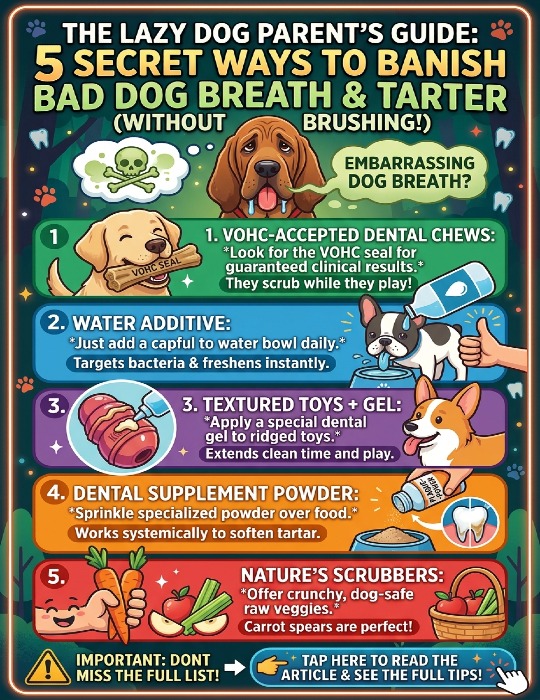
If your dog flatly refuses manual oral care, water additives offer a hands-off solution that works with every lap of water. Formulated with subtle antimicrobial compounds and natural enzymes like glucose oxidase or zinc gluconate, these liquid formulas target odor-causing bacteria throughout the oral cavity and along the gumline.
Simply measure a capful into your dog’s fresh water dish each morning. Because high-quality liquid additives are odorless and flavorless, even picky drinkers will consume them without hesitation. Over time, these additives inhibit biofilm formation, keeping breath fresh and reducing the bacterial load that contributes to painful gingivitis.
Way 3: Swap Standard Toys for Textured Dental Rubber and Rope
Turn everyday playtime into an effective cleaning session by substituting plain plush items with textured rubber toys, deep grooves, and nubs. As your dog bites into flexible rubber, the textured ridges rub against the sides of the teeth, reaching hidden surfaces and massaging the gums to encourage healthy blood flow.
- Maximize Interactive Engagement: Smear a thin layer of dog-safe dental gel or xylitol-free peanut butter into the grooves of a textured rubber bone to prolong chewing sessions to 15 or 20 minutes.
- Supervised Rope Play: Thick, natural cotton rope toys act much like dental floss by cleaning between teeth as fibers wrap around enamel. Always supervise rope play to prevent the ingestion of loose threads.
Way 4: Sprinkle a Seaweed-Based Dental Powder Over Meals
Natural supplement powders derived from specialized brown algae—most notably Ascophyllum nodosum—offer a systemic approach to soft tissue and enamel care. When digested, the bioactive compounds within the kelp absorb into the bloodstream and alter the chemical composition of your dog’s saliva.
This systemic shift softens hardened calculus over 3 to 6 weeks, making stubborn tartar brittle enough to flake away naturally as your dog eats kibble or chews on toys. Simply sprinkle a single prescribed scoop over your dog’s kibble or wet food during breakfast—no brushing required.
Way 5: Serve Crisp, Raw Fruits and Vegetables as Crunchy Scrapers

Nature offers its own powerful oral care tools through crisp, dog-safe produce. Fresh fruits and vegetables act as natural abrasive scrapers, wiping away sticky film while supplying essential antioxidants that promote healthy gum tissue.
- Carrot Sticks: Raw carrots provide a firm, crunchy matrix that gently scrubs enamel. Frozen whole carrots also offer soothing relief for teething puppies or inflamed gums.
- Apple Slices: Sliced apples (with all seeds and the core removed) help clean teeth while delivering vitamin C and dietary fiber.
- Celery Stalks: The fibrous strands in raw celery naturally clean teeth and promote fresh breath.
Crucial Pet Safety Reminder: Never offer toxic foods such as grapes, raisins, onions, garlic, or items sweetened with xylitol (birch sugar). Avoid extremely hard items like cooked marrow bones or real antlers, which frequently cause painful slab fractures on premolars.
Key Takeaways
- Brushing Isn’t the Only Way: Mechanical chewing, liquid additives, and seaweed powders provide continuous plaque control without causing daily stress for you or your dog.
- Look for Clinical Proof: Choose dental chews and treats carrying the VOHC seal to guarantee measurable tartar-reduction benefits.
- Pair At-Home Care with Observation: Passive dental care works best when combined with regular visual checks of your dog’s mouth for early signs of inflammation or tooth decay.
When to Seek Professional Veterinary Care

While these daily hacks significantly reduce plaque accumulation, at-home maintenance cannot replace professional veterinary evaluations. It’s critical to recognize the 5 Signs Your Pup Is Overdue for a Dental Checkup for Dogs before mild plaque turns into severe periodontal disease. Schedule a formal examination if you notice:
- Red, swollen, or bleeding gums along the tooth margins
- Heavy brown or yellow tartar accumulation near the gumline
- Drooling, appetite changes, or dropping food while eating
- Persistent, foul breath that does not improve with daily care
Final Thoughts
Ultimately, protecting your companion’s long-term health does not require complicated equipment or daily stress. Implementing a multi-modal strategy—combining textured chews, therapeutic water additives, natural powders, and crisp dietary additions—ensures consistent plaque management without causing friction in your home. Prioritizing consistent dog dental hygiene protects your pet’s overall health and ensures they enjoy a happier, healthier life by your side.
Frequently Asked Questions (FAQs)
Can human toothpaste be used for dogs if we run out of pet toothpaste?
No, human toothpaste should never be used on dogs. It frequently contains ingredients like xylitol, artificial sweeteners, and high levels of fluoride, which are toxic to dogs and can cause severe health complications, including hypoglycemia, liver failure, or stomach upset. Always use veterinary-approved toothpaste formulated specifically for pets.
How long does it take to see results from seaweed-based dental powders?
Most seaweed-based supplements take approximately 3 to 6 weeks of continuous daily use to show noticeable results. The active seaweed compounds alter the composition of your dog’s saliva over time, gradually softening existing calculus so that it can flake off naturally during routine chewing.
Are human dental chews or bones safe alternative options for dogs?
Human dental products and real bones pose significant hazards. Real cooked bones can splinter and cause gastrointestinal perforations, while extremely hard natural antlers frequently cause painful slab fractures on a dog’s upper premolars. Stick exclusively to soft, flexible rubber toys or VOHC-accepted dental treats designed specifically for canine oral anatomy.
How often should a dog receive a professional dental cleaning from a vet?
Most dogs benefit from an annual professional dental examination and cleaning under anesthesia starting around 2 to 3 years of age. However, smaller breeds or dogs prone to rapid plaque accumulation may require cleanings every 6 to 12 months depending on your veterinarian’s recommendation.


Follow Us
-
-

Preventive Care for Dogs: Creating a Wellness Plan for Your Dog
Creating a wellness plan for your dog involves more than just routine vet visits–it’s about integrating all […]
-

Why Older Dogs Rule: Key Benefits of Adopting a Senior Dog
When people picture bringing a new pet into their home, the mental image is almost always dominated […]
-

Affordable Dog Vaccines Near Me: A Complete Guide to Saving on Pet Healthcare
Vaccinating your dog is one of the most effective ways to protect them from dangerous and contagious […]
-

7 Secrets to a Truly Happy Dog Grooming Experience
The moment you pick up the brush, does your dog suddenly develop supersonic hearing and vanish? You’re […]
-

Schedule of Dog Vaccinations: The Complete Guide Every Pet Parent Needs
When it comes to protecting your dog’s health, few things are more important than staying on top […]
-
Dog Urine Color and Kidney Health: How to Spot Renal Disease Before It’s Too Late
Monitoring dog urine color and kidney health is one of the most effective, non-invasive daily habit shifts […]
Local Ads
