Obsessed Much? 8 Subtle Signs Your Dog Loves You

As dog owners, we spend billions of dollars every year pampering our four-legged companions, but we often find ourselves wondering what is actually going on inside their minds.
While it is easy to recognize the unmistakable, loud expressions of canine affection—such as frantic tail spins, enthusiastic door greetings, and wet face licks—canine devotion often manifests in far quieter, weirder, and more complex ways. Is your pup just following you from room to room because they view you as a walking treat dispenser, or are they genuinely head-over-heels devoted to you?
Behavioral science reveals that dogs express attachment through subtle micro-expressions and proximity habits that mirror human bonding. By looking closely at behavioral psychology and neurobiology, we can decode the quietest signs your dog loves you, separating simple food motivation from true, unconditional devotion.
If you’re eager to build a foundation rooted in trust, learning How To Build a Healthy Happy Relationship With Your Dog is the best place to start.
The 8 Subtle Signs Your Dog Loves You
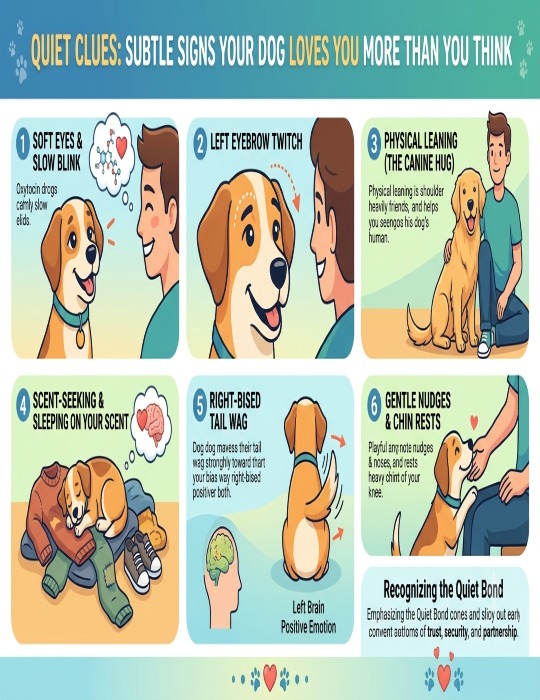
1. The Soft, Prolonged Eye Contact
When your dog holds a soft, unbroken gaze with you, they are not challenging your authority or begging for dinner—they are giving you a psychological hug.
Landmark research from Azabu University revealed that mutual eye contact between humans and dogs triggers a massive release of oxytocin (often dubbed the “love hormone”) in both species. This exact neurochemical feedback loop is identical to the bonding process between a biological mother and her newborn infant.
- What to look for: A relaxed facial muscle structure, slow blinking, and soft pupils. Unlike the hard, intense stare of a tense dog, a loving gaze is calm, gentle, and signals deep emotional trust.
2. The “Lean-In” Special
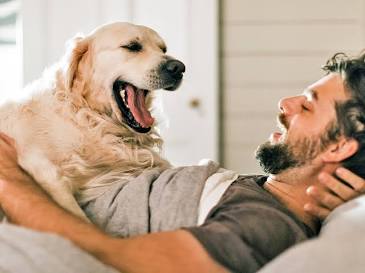
If you are standing in the kitchen or sitting on the couch and your dog walks over to press their entire body weight against your legs, take it as a major compliment. Dogs lean on their favorite people to seek physical proximity and emotional grounding.
- The Psychology: While humans use hugs to display affection, dogs cannot wrap their arms around us. Instead, they use full-body contact to anchor themselves to your presence. It is a sign that they view you as their ultimate safe harbor, using your presence to feel secure and protected.
3. Carrying Your (Stinky) Socks Around
It can be frustrating to find your dirty laundry scattered across the living room rug, but this quirky habit is actually rooted in deep affection. A dog’s sense of smell is roughly 10,000 to 100,000 times more acute than ours, and your scent is their absolute favorite olfactory profile.
- Why They Do It: Items like worn socks, used towels, or unwashed pillowcases carry a high concentration of your unique scent. When dogs feel lonely or want to feel close to you—especially when you are out of the house—they gather your scent-heavy items and cuddle with them for comfort. If they carry your items around without chewing or destroying them, it is purely a love behavior.
| Dimension | Physiological Trigger | Behavioral Indicator |
| Chemical Bonding | Oxytocin spike from mutual gaze | Soft, relaxed pupil dilation |
| Physical Anchoring | Seeking safety and grounding | Pressing full body weight (“The Lean”) |
| Scent Comfort | High olfactory scent preference | Cuddling unwashed laundry/socks |
| Empathic Resonance | Mirror neuron activation | Catching human yawns socially |
4. The Post-Meal Cuddle

A dog’s primary evolutionary instinct is survival, which means food will always be a top priority. What a dog chooses to do after eating, however, reveals their true emotional hierarchy.
- Why It Matters: Once their biological drive to satisfy hunger is met, where your dog goes next shows where their heart lies. If your dog finishes their bowl and immediately walks over to rest their head on your lap or curl up at your feet, it proves that you are their favorite non-food priority in the world.
5. Yawning When You Yawn
Have you ever yawned only to watch your dog open their mouth and do the exact same thing moments later? Contagious yawning is not just a human quirk; it is deeply tied to social attunement and empathy across species.
- The Research: Studies published on canine behavior show that dogs are significantly more likely to catch a “contagious” yawn from their primary owner than from a stranger. This social mirroring is powered by mirror neurons, indicating that your dog is attuned to your physiological state and reading your emotional cues.
If you are trying to balance social attunement with high energy levels, check out these 5 Dog Training Secrets for High-Energy Pups to help them settle down naturally.
6. The “Velcro” Shadow Routine
If your dog gets up from a deep, comfortable sleep just to follow you into the bathroom or follow you into the pantry, you have a classic “velcro dog.”
- Healthy Companionship vs. Anxiety: It is vital to distinguish healthy companionship from separation anxiety. If your dog follows you quietly, sits nearby without displaying panic, and happily settles down on the floor while you go about your day, they are simply choosing to share your space because your presence makes them feel content and secure.
7. The Eyebrow Lift & Ear Shift

Canine body language goes far beyond tail movement. Japanese researchers using high-speed motion tracking discovered that dogs display distinct facial micro-expressions depending on who approaches them.
- The Micro-Expression: When a dog sees their primary caregiver, they immediately lift their left eyebrow and slightly pull their left ear back. When meeting a stranger, facial movement drops significantly, or they shift their right ear back. That subtle brow twitch when you walk through the door is a personalized facial greeting reserved exclusively for you.
8. Letting Their Guard Down Around You
In the wild, a vulnerable posture can be dangerous for a canine. A dog will only expose their vulnerable areas—like their belly, neck, and throat—when they feel completely safe.
- What It Looks Like: If your dog regularly sleeps flat on their back with their paws up in the air (“frog-legging”), rests their chin heavily on your ankles, or falls into a deep sleep in noisy environments while pressed against you, they are demonstrating absolute confidence in your ability to protect them. You are their ultimate safe zone.

IV. Behavioral Myth-Busting: What Isn’t Love?
It is easy to misinterpret certain high-arousal canine behaviors as love when they are actually rooted in stress or control. To dive deeper into reading body language accurately, read our guide on Beyond the Wag: Decoding the True Signs of Happy Dogs.
| Behavior | Often Misinterpreted As | The Behavioral Reality |
| Resource Guarding | “They are protecting me because they love me!” | Insecurity/Anxiety: Growling or blocking people who approach you treats you like an object to control, not a partner to trust. |
| Hyperactive Jumping | “They are so happy to see me!” | Over-Arousal: Frantic leaping and mouthing often stem from poor impulse control or stress, whereas calm attachment presents as gentle nudges and steady tail wags. |
| Relentless Shadows | “They never want to leave my side!” | Separation Anxiety: Panic, pacing, and vocalization when you move between rooms indicate stress rather than peaceful bonding. |
Key Takeaways
- Oxytocin Drives Connection: Soft eye contact and gentle touch trigger a mutual “love hormone” spike in both you and your dog.
- Scent Is Comfort: Hoarding dirty laundry or worn items without chewing them is a sign your scent calms their nervous system.
- Micro-Expressions Matter: Facial twitches—like a left eyebrow lift—are specialized greetings reserved specifically for primary caregivers.
- Proximity Over High Energy: A dog choosing to rest quietly near you post-meal shows deeper emotional attachment than hyperactive door-jumping.
Final Thoughts
Uncovering the true signs your dog loves you requires stepping away from human definitions of affection and learning to read subtle canine communication.
Real devotion is not always loud, chaotic, or hyperactive; more often than not, it is revealed in a soft eyebrow raise when you walk into the room, a quiet lean against your legs while you make coffee, or a dirty sock lovingly carried to their dog bed.
When you know how to read these subtle cues, you realize that your dog is constantly communicating their loyalty and affection in their own unique language. Paying attention to these small moments deepens the bond you share, proving that you truly are your pup’s favorite person in the world.
Frequently Asked Questions (FAQs)
1. How do I know if my dog loves me or just wants food?
Pay close attention to what your dog does after high-value moments like meals or play. If your dog gets fed and immediately walks away to sleep in a separate room, food is likely their primary motivator during that interaction. However, if they seek you out for snuggles, rest their head on your feet, or give you soft eye contact once their belly is full, their affection for you transcends their hunger drive.
2. Do dogs have a favorite person in the family?
Yes, dogs often select a primary favorite person. This choice is usually determined by who gives them the most consistent positive attention, feeds them, plays with them, or simply matches their energy level during their key socialization window (between 2 and 4 months of age). They show this preference through subtle signals like resting near that person or offering left-eyebrow facial greetings when they walk into the room.
3. Why doesn’t my dog lick me or cuddle very much? Does that mean they don’t love me?
Not at all. Just like humans, individual dogs have unique personality types and love languages. Some dogs are naturally less physical or may feel overwhelmed by close hugs and intense affection. Subtle signs—such as keeping you in their line of sight, sleeping in the same room, or bringing you their favorite toys—are just as powerful expressions of devotion as heavy cuddling or face licking.
4. Is it love when my dog sleeps on my clothes or bed when I’m not home?
Yes, this is one of the clearest scent-based compliments a dog can give. Your bed and worn clothes carry the highest concentration of your unique scent. Cuddling up on your unwashed hoodie or pillow allows your dog to feel safe and comforted by your scent profile while you are away, effectively reducing their stress levels until you return.


Follow Us
-
-

Preventive Care for Dogs: Creating a Wellness Plan for Your Dog
Creating a wellness plan for your dog involves more than just routine vet visits–it’s about integrating all […]
-

5 Signs Your Pup is Overdue for a Dental Checkup for Dogs
There is a persistent myth in the pet-owning world that “dog breath” is simply an unavoidable side […]
-

Dog Shots Side Effects: What Vets Don’t Always Tell You
Every year, millions of dog owners take their furry friends to the vet for vaccinations, trusting the […]
-
7 Simple At-Home Pet Health Checks That Could Save Your Dog’s Life
Our dogs are masters of living in the moment, but they are also masters of hiding their […]
-

Post-Vaccine Care for Dogs: Side Effects, Recovery & Care Tips
Vaccinations play a crucial role in protecting your dog from serious diseases, but just like humans, dogs […]
-
Inside a Professional Dog Fitness Session: What Actually Happens?
Most dog owners assume high-level exercise means launching a tennis ball across an open field until their […]
Local Ads
