Dog Urine Color Kidney Failure: What Does Your Dog’s Urine Color Mean?

Every routine walk with your dog provides a direct window into their internal health through their elimination habits, yet subtle shifts in fluid appearance are often overlooked until serious physical distress manifests.
As a dedicated pet owner, observing your companion’s daily waste can feel unglamorous, but monitoring fluid output is actually one of the simplest non-invasive preventative care measures available. Incorporating quick routine inspections alongside 7 Simple At-Home Pet Health Checks That Could Save Your Dog’s Life allows you to catch hidden medical issues long before outward clinical symptoms show up.
When changes in color, clarity, or frequency occur, questioning whether dog urine color kidney failure risks are actively present becomes an essential diagnostic query. The mammalian renal system functions as a complex, highly sensitive filtration plant designed to regulate systemic blood pressure, manage electrolyte concentrations, process metabolic waste products, and preserve necessary hydration levels.
When the underlying nephron units within the renal architecture begin to experience strain, toxicity, or tissue death, the physical composition of excreted waste alters immediately, serving as a primary indicator for localized or systemic pathology long before outward physical signs emerge.
The Silent Progression of Canine Renal Disease
Understanding how visual waste indicators correspond to renal performance is vital because metabolic organ degradation can progress silently for months or even years. When evaluating conc uperns surrounding dog urine color kidney failure pathways, companion animal guardians must recognize that clinical signs of renal disease often do not appear until approximately 75% of functional nephron capacity has already been permanently compromised.
Clinical veterinary epidemiology indicates that while chronic kidney disease (CKD) affects roughly 0.5% to 1.5% of the general canine population, that incidence dramatically surges to over 10% in senior dogs aged 10 and older. Because canine kidneys possess immense functional reserve, they work overtime to compensate for failing tissue, effectively masking internal structural damage.
By the time a dog exhibits physical lethargy, unexplained weight loss, intractable vomiting, or severe halitosis, the window for early therapeutic intervention has narrowed significantly. Consequently, learning to read visual changes in fluid shade, saturation, and turbidity acts as a vital early warning system that allows veterinarians to intervene while functional tissue can still be protected.
Decoding the Spectrum: What Specific Urine Colors Reveal
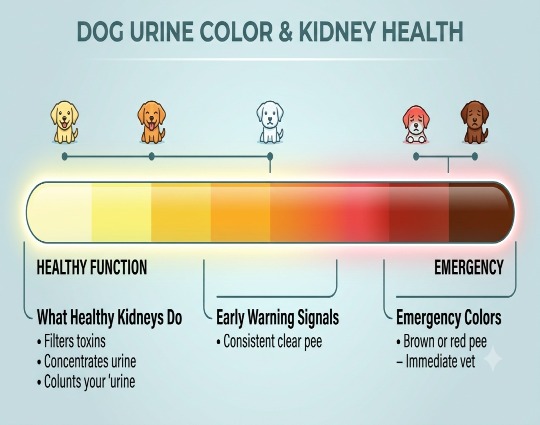
The baseline standard for healthy canine waste output is a clear, transparent shade of pale yellow to straw-colored liquid with minimal odor.
This specific appearance indicates that the renal tubules are functioning normally, actively reabsorbing necessary water while filtering out waste solutes such as urea and creatinine at balanced concentrations.
When fluid output diverges from this healthy baseline, specific visual profiles point directly toward distinct mechanical or biological failures within the upper and lower urinary tracts:
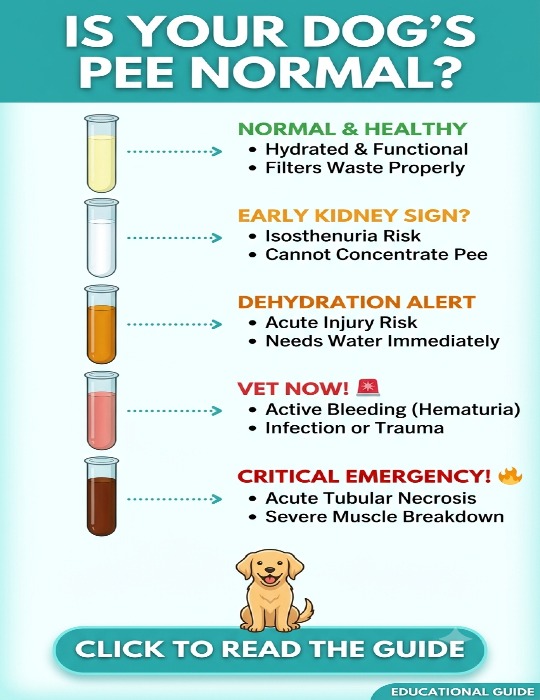
- Consistently Clear or Watery Liquid: Indicates an inability of the kidneys to concentrate waste solutes, a condition known as isosthenuria. When functional nephron loss occurs, water passes straight through the renal system without proper filtration, resulting in high volume, pale fluid output accompanied by excessive thirst (polydipsia). This pattern serves as a classic hallmark sign of Stage 1 or Stage 2 Chronic Kidney Disease.
- Deep Amber or Concentrated Orange: Signals severe systemic dehydration or elevated concentrations of bilirubin. Sustained dehydration drastically reduces renal blood perfusion, depriving delicate kidney tissues of oxygen and elevating the risk of sudden, severe Acute Kidney Injury (AKI).
- Pink, Bright Red, or Rust Tints: Denotes hematuria, or the direct presence of red blood cells within the urinary tract. While often stemming from lower tract issues like bacterial cystitis or bladder stones, red hues can also signify severe upper tract pathology, including acute pyelonephritis (kidney infection), renal infarction, or structural kidney trauma.
- Dark Brown, Tea-Colored, or Cola Shades: Represents a critical veterinary emergency caused by hemoglobinuria or myoglobinuria (massive muscle cell breakdown). Large, toxic protein molecules filter into the kidneys, clogging delicate tubules and triggering acute tubular necrosis, which can cause total, sudden renal shutdown.
- Cloudy, Turbid, or Milky Appearance: Points toward significant cellular debris, pus, lipid accumulation, or heavy mineral crystallization within the fluid. Unchecked lower tract infections causing cloudy waste can migrate upward through the ureters, directly damaging the renal pelvis and precipitating acute kidney infections.
Changes in Excretion Volume and Clinical Diagnostics
Beyond color shifts, changes in excretion volume provide equally critical diagnostic clues that demand immediate professional evaluation.
For instance, a sudden surge in daily volume (polyuria) coupled with increased water consumption is the primary physical signal that chronic renal failure is underway. Conversely, a dramatic drop in fluid output (oliguria) or the complete cessation of urination (anuria) indicates an acute renal crisis or severe obstruction, representing a life-threatening medical emergency requiring immediate intensive care.
When suspicious fluid changes prompt a veterinary visit, clinicians rely on a standardized diagnostic protocol to evaluate internal organ function accurately. Asking your vet to perform comprehensive screening ensures nothing critical is missed—consulting resources like Are Your Pet Exams Thorough Enough? A Vet’s Top 5 Priorities can help you understand what standard protocols should cover.
A complete urinalysis assesses Urine Specific Gravity (USG) to measure concentration capacity, along with pH balance, glucose, and protein-to-creatinine ratios (UPC) to detect early protein leakage through damaged glomeruli.
These urine metrics are paired with complete blood chemistry panels measuring Blood Urea Nitrogen (BUN), serum creatinine, and Symmetric Dimethylarginine (SDMA)—an advanced biomarker capable of detecting kidney dysfunction when as little as 25% to 40% of organ function has been lost, long before standard creatinine levels spike.
Taking Proactive Action for Long-Term Health

Ultimately, staying proactive by establishing a baseline for your dog’s daily elimination habits empowers you to identify subtle health changes before they escalate into irreversible medical crises.
Scheduling routine Wellness checkups is essential for catching silent internal degradation early, which is why following A Complete Checkup for Dogs Guide: Why Annual Dog Checkups Are Non-negotiable is critical for long-term health management. Pairing routine home observations with annual or bi-annual diagnostic screenings for senior dogs ensures that potential renal compromise is caught and managed at the earliest possible stage.
Should you ever notice persistent clear liquid, sudden red discoloration, or dark brown waste output, contact your veterinarian immediately to perform a professional diagnostic evaluation and protect your companion’s long-term organ health.
Key Takeaways
- Urine Color is an Internal Indicator: Healthy urine is straw-yellow; consistent clear, amber, red, or brown urine signals underlying renal or urinary issues.
- Kidney Damage Hides Long: Clinical signs often appear only after 75% of renal nephrons are permanently damaged.
- Clear Urine Isn’t Always Healthy: Consistently clear, watery urine paired with high thirst is a prime early sign of Chronic Kidney Disease (CKD).
- Brown and Red Urine are Urgencies: Dark brown urine points to acute tubular damage and muscle breakdown, while red urine points to active bleeding in the renal tract.
- Early Diagnostics Save Capacity: Advanced markers like SDMA can flag kidney decline when only 25–40% of function is lost.
Final Thoughts
Paying attention to subtle visual shifts during daily outdoor walks remains one of the simplest, most effective ways to protect your companion’s long-term well-being. Understanding how dog urine color kidney failure warnings manifest allows pet owners to act as proactive advocates, identifying early functional decline before irreversible tissue damage occurs.
Whether you notice persistent watery fluid, dark concentrated amber, or alarming red shades, catching these signals early gives your veterinarian the best possible chance to intervene with targeted treatments, dietary adjustments, and fluid therapies.
By pairing routine daily observations with regular diagnostic screenings—especially for senior dogs—you can safeguard your dog’s internal health and ensure they enjoy a comfortable, vibrant life by your side.
Frequently Asked Questions
Why is my dog drinking a lot of water and peeing clear liquid?
Excessive drinking (polydipsia) paired with clear, non-concentrated urine (isosthenuria) typically means the kidneys have lost their ability to filter solutes and retain body water. This is a classic early marker of Stage 1 or Stage 2 Chronic Kidney Disease.
Can a urinary tract infection (UTI) cause kidney failure in dogs?
Yes. If a lower urinary tract infection is left untreated, bacteria can migrate upward through the ureters into the kidneys (a condition called pyelonephritis), damaging renal tissue and potentially leading to acute kidney injury.
What should I do if my dog’s urine is dark brown or tea-colored?
Seek emergency veterinary care immediately. Dark brown urine often indicates severe muscle breakdown (myoglobinuria) or heavy red blood cell damage (hemoglobinuria), both of which release toxic proteins that can rapidly clog kidney tubules and cause sudden kidney failure.
How often should senior dogs have their urine tested?
Dogs aged 7 and older should undergo a full urinalysis and blood chemistry panel (including SDMA) at least once every 6 months to catch early signs of kidney degradation before physical symptoms occur.


Follow Us
-
-

Essential Health Checkups for Your Dog: A Key Component of Dog Preventive Care
Regular health checkups are a fundamental aspect of dog preventive care. These checkups help detect potential health […]
-

Is Your Dog Itchy? The Best Dog Food for Allergies
If you find yourself constantly woken up in the middle of the night by the thumping sound […]
-

How to Find Affordable Dog Vaccine Packages Near Me: A Budget-Friendly Guide for Pet Owners
Finding affordable dog vaccine packages is crucial for every pet parent who wants to provide the best […]
-

Dog Sleeping Positions Meaning: What Your Dog’s Sleeping Position Says About Them
Have you ever caught your furry friend dozing off in an unusual position and wondered what it […]
-

Understanding Dog Vaccinations: What You Need to Know
Ensuring your dog is up-to-date with their vaccinations is a vital part of maintaining their health and […]
-

Dog Nutrition Near Me: Interactive Workshop & Local Dog Nutrition Classes
Feeding your dog has evolved from a chore into a science. As we move into 2026, the […]
Local Ads
